
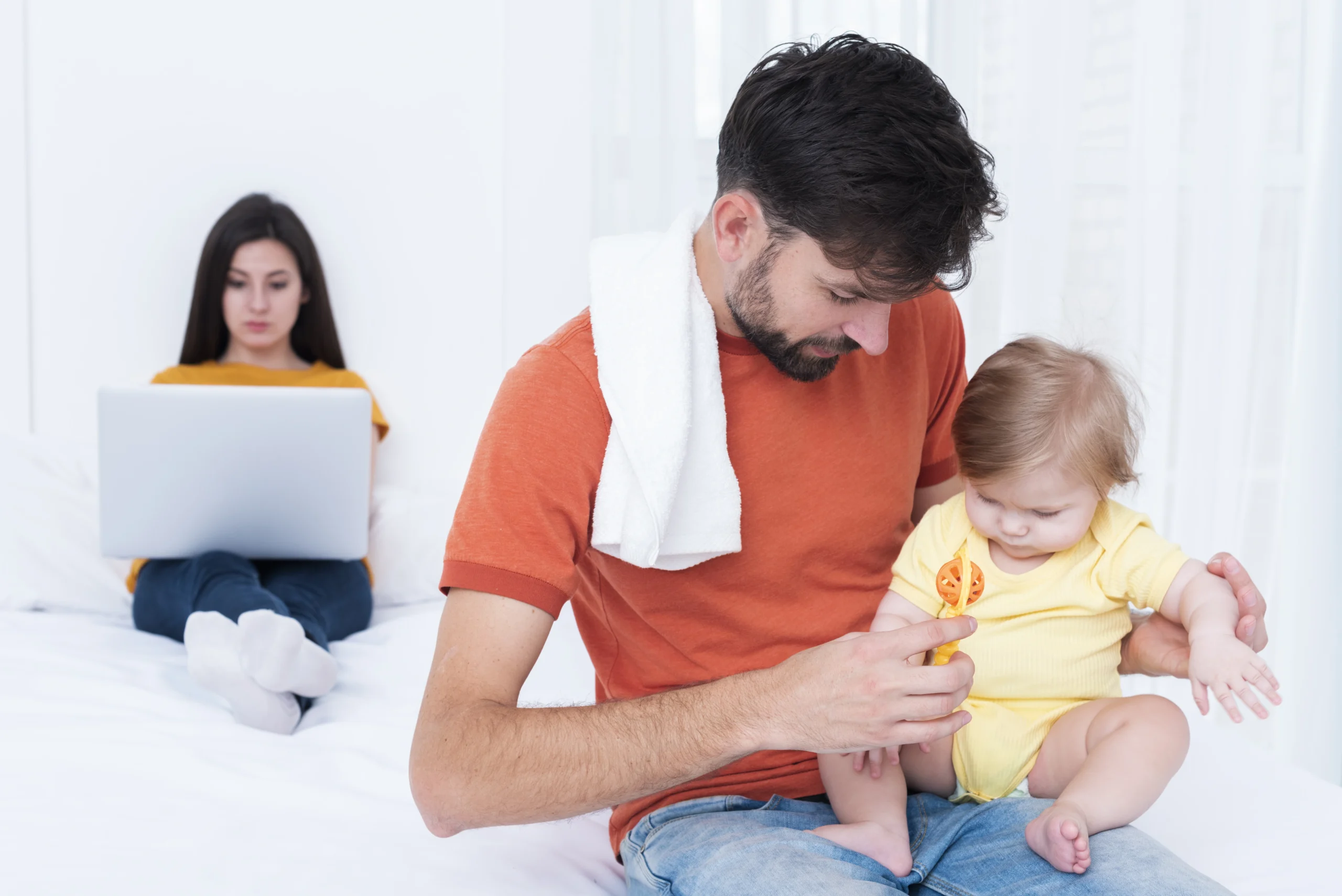
Motherhood is often portrayed as constant presence. Endless availability. Emotional vigilance without pause. Yet one of the most quietly powerful moments in a mother’s life is when she steps away even briefly and leaves her baby alone with dad.
This moment is rarely discussed honestly. It is wrapped in guilt, humour, and social commentary, but rarely examined through a professional or psychological lens. What actually happens in that space tells us far more about modern motherhood than about fathers alone.
This article explores motherhood not as sacrifice, but as a system one that changes, recalibrates, and matures when a mother allows herself to step back.
Recent article click on here “Are We Actually in Relationships Anymore? A Professional Look at How Modern Love Is Really Functioning”
The Psychological Weight Mothers Carry Before Leaving
For many mothers, leaving a baby even in capable hands is not a neutral act. It involves layered cognitive processing:
- Is the baby safe?
- Will routines be followed?
- Will I be judged?
- Am I being selfish?
From a maternal mental health perspective, this anticipatory anxiety is not weakness. It is the byproduct of social conditioning that positions mothers as primary regulators of family stability. Motherhood has historically been defined by presence rather than sustainability.
When a mum leaves her baby with dad, she is not “taking time off.” She is challenging a deeply embedded identity structure.
What Motherhood Learns in the Absence
One of the least acknowledged truths about motherhood is that competence is reinforced through exclusivity. The more irreplaceable a mother feels, the heavier the load becomes.
When she steps away, even temporarily, something important happens:
motherhood loosens its grip on control.
This is not abandonment. It is recalibration.
Professionally observed family systems show that maternal stress reduces not when mothers do more but when they trust the system to function without them. The act of leaving becomes an experiment in resilience rather than neglect.
How Babies Adapt and Why This Matters to Mothers
Many mothers worry that their baby will feel abandoned, confused, or distressed in their absence. In reality, babies respond to responsiveness, not identity.
When mum leaves and dad remains present, the baby learns something foundational: safety does not disappear when one attachment figure steps away. This knowledge reduces separation anxiety later and supports emotional flexibility.
For mothers, this is critical. It reframes motherhood from being the only source of regulation to being part of a reliable caregiving network. That shift alone reduces burnout risk significantly.
The Hidden Emotional Labour of Being ‘The Default Parent’
Modern motherhood often includes an invisible role: default parenting.
The mother is the one who remembers schedules, anticipates needs, tracks emotional changes, and maintains continuity.
When she leaves the baby with dad, she is not only stepping away physically she is temporarily relinquishing cognitive labour.
This can feel deeply uncomfortable at first. Many mothers report:
- Mental checking (“Did I pack everything?”)
- Intrusive worry
- The urge to micromanage remotely
Professionally, this phase is essential. It exposes how much unseen work motherhood carries and how unsustainable it becomes without redistribution.
Why Guilt Peaks Right Before Relief
One of the most paradoxical aspects of motherhood is this:
guilt often peaks moments before relief arrives.
When mothers allow themselves to leave whether for work, rest, or autonomy they frequently experience a short surge of discomfort followed by a noticeable emotional exhale. This is not selfishness. It is nervous system regulation.
From a maternal wellbeing standpoint, short separations can:
- Restore emotional bandwidth
- Reduce irritability
- Improve maternal responsiveness upon return
In other words, stepping away can make motherhood more present, not less.
How Motherhood Changes When Trust Is Shared
Trust is a structural element of motherhood, not just an emotional one.
When a mum trusts that her baby will be cared for without her oversight, she begins to shift from constant vigilance to secure leadership. This changes how she shows up not just as a mother, but as a person.
Professionally, this redistribution of trust is associated with:
- Lower maternal anxiety
- Healthier co-parenting dynamics
- Increased long-term maternal satisfaction
Motherhood becomes collaborative rather than isolating.
The Identity Expansion Mothers Don’t Expect
Many mothers are surprised by what surfaces when they step away. Without constant caregiving, questions arise:
- Who am I when I’m not actively mothering?
- What parts of myself have gone quiet?
- What do I need, not just what does my child need?
This is not an identity crisis. It is identity expansion.
Healthy motherhood does not erase the individual; it integrates her. Temporary separation often reveals how tightly a woman has compressed herself around the role.
Why This Moment Is Developmentally Healthy for Mothers
Much has been written about child development. Far less attention is given to maternal development.
Motherhood is not static. It evolves through stages of attachment, autonomy, and recalibration. Learning to leaveand return is one of those stages.
From a professional maternal health perspective, this practice:
- Reduces emotional enmeshment
- Supports postnatal identity integration
- Protects long-term mental health
Motherhood that allows space is not weaker. It is more sustainable.
Reframing the Narrative Entirely
The question is not whether mothers can leave their babies with someone else.
The real question is whether motherhood is allowed to include rest, trust, and selfhood without moral penalty.
When a mum leaves her baby with dad, she is not stepping out of motherhood.
She is practising a form of it that endures.
The Quiet Truth Most Mothers Discover
Most of the time, when a mother leaves her baby with dad:
- The baby is fine.
- The world does not collapse.
- And motherhood unexpectedly feels lighter.
Not because love has diminished, but because it has been shared.
And that, quietly, is one of the healthiest things a mother can do.


