
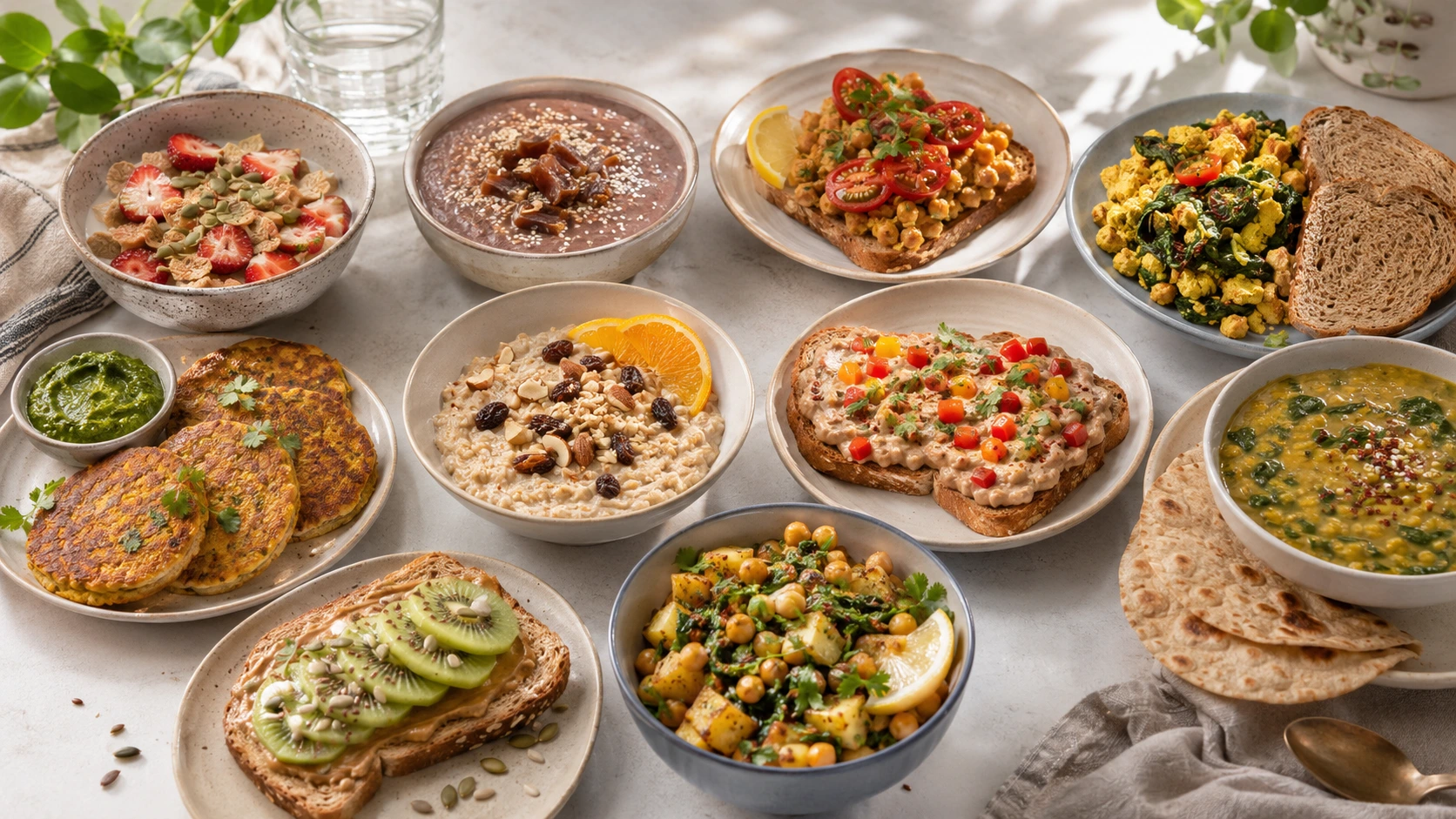
Iron rich breakfasts can be warm, savoury, crunchy, spicy, comforting and completely smoothie-free.
Not every woman wants a green smoothie at 7.00 a.m. Some want something they can chew. Some want a breakfast that feels like food, not a drink. Some want a meal that can carry them through school drop-off, lectures, work meetings, housework, commuting, workouts or a long day of responsibilities.
And for many women, breakfast is not just about taste.
It is about energy.
Women often search for iron-rich breakfast ideas because tiredness, heavy periods, busy schedules, vegetarian eating patterns and low energy can make food choices feel more important. This does not mean breakfast is a medical treatment. But it does mean breakfast can be planned more intelligently.
The good news is simple: iron-rich vegetarian breakfasts do not have to be boring.
They can be built from lentils, chickpeas, tofu, spinach, seeds, nuts, fortified cereals, iron-rich breads, ragi, oats, beans, dried fruits and vitamin C-rich fruits that help the meal feel complete.
The trick is not to chase one miracle food.
The trick is to build a better breakfast plate.
Iron Rich Breakfasts: What Makes a Breakfast Actually Useful?
An iron-rich breakfast is not only a breakfast that contains one iron ingredient.
A stronger breakfast has three things.
First, it has a plant-based iron source. This may be lentils, chickpeas, beans, tofu, spinach, sesame seeds, pumpkin seeds, oats, fortified cereal or wholegrain bread.
Second, it has something that supports absorption. Vitamin C-rich foods such as orange, guava, strawberries, kiwi, tomato, capsicum, lemon or amla can help make the meal more iron-friendly.
Third, it is filling enough to feel like breakfast. A tiny bowl of fruit alone may be fresh, but it may not support a long morning. Add protein, fibre and healthy fats so the meal feels satisfying.
This is especially important for women who do not enjoy smoothies.
A good iron-rich breakfast should feel like real food.
Why Women Search for Iron Rich Breakfast Ideas
Many women are trying to eat better without making breakfast complicated.
Some are vegetarian. Some are reducing meat. Some have heavy periods. Some are tired of skipping breakfast. Some are working long hours and need more stable energy. Some want simple breakfast ideas for adults that do not feel like children’s cereal or diet food.
This is where food planning matters.
Women do not always need fancy wellness bowls. Sometimes they need a hot lentil pancake, a bowl of ragi porridge, chickpeas on toast, fortified cereal with fruit, or a tofu scramble that can be packed before work.
Breakfast can be practical and still powerful.
It can also reflect culture. South Asian, Mediterranean, Middle Eastern and global vegetarian food traditions already include many iron-friendly ingredients. Lentils, beans, greens, sesame, chickpeas, ragi, dates and whole grains have been part of everyday kitchens for generations.
If you enjoy traditional food stories, Satynmag’s article on Sri Lankan Traditional Cuisine and Recipes is a lovely extra reading option.
The modern goal is to use familiar foods with smarter combinations.
The Smoothie Problem
Smoothies can be convenient, but they are not for everyone.
Some women dislike cold breakfasts. Some feel hungry again after a smoothie. Some do not enjoy the texture. Some do not want to clean a blender in the morning. Some prefer savoury food. Some simply want breakfast to feel like a proper meal.
That is completely fine.
Iron-rich breakfasts can be made without blending anything.
In fact, many excellent iron-rich breakfast options are warm, savoury and satisfying. Think lentil dosa, chickpea toast, spinach tofu scramble, ragi porridge, bean breakfast bowls, fortified cereal with fruit, or wholegrain bread with sesame spread.
The best breakfast is the one you can repeat.
If you hate smoothies, do not force yourself into smoothie culture. Build a breakfast style that fits your real life.
Top 10 Iron-Rich Foods for Vegetarian Breakfasts
For vegetarian breakfasts, these are some of the most useful iron-friendly ingredients to keep in mind.
1. Fortified breakfast cereals
Many cereals are fortified with iron, but the amount depends on the brand. Always check the nutrition label.
2. Oats
Oats are easy to use in porridge, overnight oats, baked oats or savoury oats.
3. Lentils
Lentils can become dosa, pancakes, patties, dhal toast or breakfast bowls.
4. Chickpeas
Chickpeas are filling and work well in salads, toast toppings, wraps and savoury bowls.
5. Beans
White beans, kidney beans and black beans can be used for breakfast toast, bowls and spreads.
6. Tofu
Tofu is useful for scrambles, wraps and high-protein vegetarian breakfasts.
7. Spinach and leafy greens
Greens can be folded into eggs if you eat eggs, tofu, dhal, pancakes, rotis or breakfast bowls.
8. Pumpkin seeds
A small topping can add crunch and minerals to porridge, cereal or toast.
9. Sesame seeds and tahini
Sesame can be used in chutneys, spreads, toppings and South Asian-style breakfasts.
10. Ragi or kurakkan
Ragi can be used for porridge, roti, pancakes or string hopper-style meals depending on your kitchen tradition.
This is not a strict ranking. It is a practical breakfast list.
The best choice is the one you will actually eat.
Iron Rich Breakfast Cereals: What to Look For
Iron-rich breakfast cereals can be useful, especially for busy mornings.
But not all cereals are equal.
Look for cereals that are fortified with iron, not only marketed as “healthy”. Check the nutrition label and compare the iron percentage per serving. Also check sugar, fibre and portion size.
A good cereal breakfast should not be only cereal.
Make it more complete by adding fruit, nuts or seeds.
For example, try fortified cereal with yoghurt or milk, sliced strawberries, pumpkin seeds and a small handful of nuts. Or try fortified cereal with banana, raisins and sesame seeds. If you prefer plant-based milk, check whether it is fortified.
This kind of breakfast is quick, but still more thoughtful than a plain bowl of sweet cereal.
For women who rush in the morning, fortified cereals can be one of the easiest iron-rich breakfast options.
Is Iron Rich Bread a Good Breakfast Option?
Iron-rich bread can be useful, especially if it is made with fortified flour, whole grains, seeds or added nutrients.
Whole wheat bread, seeded bread, sourdough made with fortified flour, or multigrain bread can all be part of a good breakfast.
But bread becomes more valuable when the topping is strong.
Instead of plain toast, build iron-friendly toast.
Try hummus with tomato and lemon. Try white bean mash with spinach. Try tahini with banana and sesame seeds. Try scrambled tofu with capsicum. Try peanut butter with sliced strawberries. Try chickpea mash with herbs and a squeeze of lime.
Bread is not the problem.
A plain slice of bread may not be enough. But bread plus protein, seeds, legumes and fruit can become a proper breakfast.
Iron-Rich Fruits and Vegetables: What Helps Most?
Many people search for iron-rich fruits, but fruits are usually not the strongest iron sources compared with legumes, tofu, seeds, fortified cereals or grains.
Still, fruits are very useful in an iron-rich breakfast because many provide vitamin C, which helps support iron absorption from plant foods.
Good fruits to pair with iron-rich breakfasts include:
- Guava.
- Orange.
- Kiwi.
- Strawberries.
- Papaya.
- Pomegranate.
- Mango.
- Pineapple.
- Amla.
- Lemon or lime.
Dried fruits such as raisins, dates, prunes and dried apricots can also add small amounts of iron and natural sweetness, but they should be used in reasonable portions because they are concentrated.
Vegetables can also help.
Spinach, kale, beet greens, peas, potatoes with skin, tomatoes, capsicum and broccoli can all be used in breakfast bowls, pancakes, toast or wraps.
The smart move is to pair iron sources with colourful fruits and vegetables.
A lentil pancake with tomato chutney is better than a plain lentil pancake. Fortified cereal with strawberries is better than cereal alone. Chickpea toast with lemon and capsicum is better than chickpea toast without freshness.
What Food Is Highest in Iron for Breakfast?
For a vegetarian breakfast, fortified breakfast cereals are often among the highest iron options because iron is added during processing.
But if you prefer whole-food style breakfasts, legumes, tofu, seeds, oats, ragi and leafy greens are more practical everyday options.
The best breakfast strategy is not to eat only the highest iron food.
It is to combine several moderate iron sources.
For example:
- Oats plus pumpkin seeds plus raisins.
- Ragi plus sesame plus dates.
- Tofu plus spinach plus wholegrain toast.
- Chickpeas plus tahini plus tomato.
- Lentil pancakes plus coriander chutney plus guava.
This combination style makes breakfast more balanced and more enjoyable.
It also keeps the article-worthy truth simple: the best iron-rich breakfast is usually a plate, not a single ingredient.
Recipe 1: Spinach Tofu Scramble on Wholegrain Toast
This is a warm, savoury breakfast for women who want something filling before work.
You need:
Firm tofu, spinach, onion, tomato, capsicum, turmeric, black pepper, chilli flakes, lemon juice, wholegrain or fortified bread, and pumpkin seeds.
How to make it:
Crumble the tofu with your hands or a fork. Sauté onion and capsicum lightly. Add tofu, turmeric, pepper and spinach. Cook until the spinach softens. Add chopped tomato at the end and finish with lemon juice.
Serve on wholegrain toast and sprinkle pumpkin seeds on top.
Why it works:
Tofu, spinach, wholegrain bread and pumpkin seeds make the breakfast iron-friendly. Tomato and lemon add freshness and vitamin C. It feels like a proper breakfast, not a health punishment.
Make it better:
Add avocado if you want creaminess. Add chilli if you like heat. Add mushrooms if you want more volume.
Recipe 2: Ragi Porridge With Sesame, Dates and Orange
This is a comforting option for women who like warm breakfasts.
You need:
Ragi flour or kurakkan flour, milk or fortified plant milk, dates, sesame seeds, cinnamon, crushed nuts and orange slices on the side.
How to make it:
Mix ragi flour with a little water first to avoid lumps. Add it to warm milk and stir until it thickens. Add chopped dates and cinnamon. Top with sesame seeds and nuts.
Eat with orange slices or guava on the side.
Why it works:
Ragi, sesame and dates make the bowl more mineral-rich. The fruit on the side adds a bright contrast and helps the breakfast feel fresh.
Make it better:
Use less sweetener and let the dates do the work. Add crushed peanuts or almonds for texture.
This is a good example of how traditional vegetarian ingredients can be brought into a modern breakfast. If you enjoy this kind of food heritage, read Satynmag’s piece on Rediscovering Ancient Vegetarianism and the Wellness Wisdom of South Asia.
Recipe 3: Chickpea Breakfast Toast With Lemon Cabbage
This is for women who want a cheap, easy and satisfying breakfast.
You need:
Boiled chickpeas or canned chickpeas, wholegrain toast, tahini or hummus, shredded cabbage, lemon juice, tomato, coriander, black pepper and chilli powder.
How to make it:
Mash chickpeas roughly with lemon juice, pepper, chilli and a spoon of tahini or hummus. Toast the bread. Add the chickpea mash on top.
In a small bowl, mix shredded cabbage with lemon juice, tomato and coriander. Place it over the chickpeas or serve it on the side.
Why it works:
Chickpeas and wholegrain bread give the meal substance. Cabbage stays crunchy and does not become watery quickly. Lemon and tomato make it fresher and more iron-friendly.
Make it better:
Add pomegranate seeds if you want colour. Add cucumber only if you eat it immediately, because cucumber can release water.
This also works as a brunch idea when friends come over. Make the chickpea mash, toast the bread and serve toppings separately.
Recipe 4: Fortified Cereal Bowl That Does Not Feel Like Children’s Breakfast
This is the fastest breakfast in the list, but it can still feel grown-up.
You need:
Iron-fortified cereal, yoghurt or milk, strawberries or kiwi, pumpkin seeds, raisins or dried apricots, and a few nuts.
How to make it:
Add cereal to a bowl. Pour in yoghurt or milk. Top with fruit, pumpkin seeds, chopped dried fruit and nuts.
Why it works:
Fortified cereal can be a strong breakfast iron source, while fruit and seeds make the bowl more balanced. It is fast enough for busy mornings but more thoughtful than plain cereal.
Make it better:
Choose lower-sugar cereal where possible. Use Greek yoghurt if you want more protein. Keep the cereal separate until eating if you are taking it to work, so it stays crunchy.
For busy women who need food that supports the whole workday, Satynmag’s article on Healthy Snacks to Supercharge Your Work Day is a useful extra reading option.
Recipe 5: Moong Dal Chilla With Tomato-Coriander Chutney
This is one of the best vegetarian iron-rich breakfast ideas for women who prefer savoury food.
You need:
Moong dal, onion, green chilli, ginger, coriander, spinach, tomato, lemon juice and spices.
How to make it:
Soak moong dal overnight or for a few hours. Blend it with ginger, chilli and a little water into a batter. Add chopped spinach, onion and coriander. Cook like thin pancakes on a lightly oiled pan.
For the chutney, blend or chop tomato, coriander, lemon juice, chilli and a pinch of salt.
Why it works:
Moong dal is filling and breakfast-friendly. Spinach adds greens. Tomato and lemon add freshness. It feels like real food and can also be packed.
Make it better:
Serve with yoghurt if you enjoy it, but keep tea or coffee slightly away from the meal if you are trying to maximise iron absorption.
Bonus Breakfast Ideas for Women Who Want Variety
Not every breakfast needs a full recipe.
Here are simple iron-rich breakfast options you can rotate.
- Oats with pumpkin seeds, raisins and orange.
- Wholegrain toast with hummus, tomato and sesame.
- Ragi roti with spinach dhal.
- Chickpea and cucumber salad with lemon, eaten with toast.
- Bean mash on seeded bread.
- Tofu and capsicum wrap.
- Fortified cereal with strawberries and nuts.
- Lentil dosa with tomato chutney.
- Peanut butter toast with sliced strawberries and chia seeds.
- Spinach and potato breakfast bowl with lemon.
These breakfasts are not extreme. They are practical.
That is what makes them easier to repeat.
Top 10 Iron-Rich Breakfast Ideas for Adults
Here is a quick list for adults who want practical, non-smoothie breakfasts.
- Fortified cereal with strawberries and pumpkin seeds.
- Ragi porridge with sesame and dates.
- Chickpea toast with lemon and tomato.
- Tofu spinach scramble with wholegrain bread.
- Lentil pancakes with coriander chutney.
- Oats with raisins, nuts and orange slices.
- White bean toast with capsicum and herbs.
- Spinach dhal with roti or toast.
- Peanut butter and seed toast with kiwi.
- Breakfast bowl with chickpeas, potatoes, greens and lemon.
The best one depends on your morning.
If you have five minutes, choose fortified cereal. If you have ten minutes, choose chickpea toast. If you can prep ahead, choose moong dal batter or ragi porridge mix.
What to Drink With an Iron-Rich Breakfast
This part matters.
Tea and coffee are morning favourites, but they may reduce iron absorption when taken directly with iron-rich meals, especially plant-based meals.
You do not have to give them up completely.
A practical approach is to enjoy tea or coffee a little later instead of directly with breakfast.
With the meal, choose water, lemon water, orange slices, guava, strawberries, kiwi or another vitamin C-rich fruit.
This small timing change can make an iron-rich breakfast more useful without making your morning feel strict.
How to Meal Prep Iron-Rich Vegetarian Breakfasts
Meal prep does not need to be complicated.
Cook chickpeas ahead and keep them in the fridge. Soak moong dal overnight. Roast pumpkin seeds or sesame seeds lightly and keep them in a jar. Wash and chop greens. Keep fortified cereal at home for emergency mornings. Make ragi flour mix ready in a container. Boil potatoes with skin and use them in breakfast bowls.
The goal is to reduce morning decisions.
If you have three breakfast bases ready, you can rotate toppings.
For example:
- Ragi porridge base.
- Chickpea mash base.
- Moong dal batter.
From these three, you can create several breakfasts without starting from zero every morning.
This is how healthy eating becomes realistic.
Common Mistakes With Iron-Rich Breakfasts
One mistake is relying only on spinach.
Spinach is useful, but it should not be your only iron strategy. Combine it with lentils, chickpeas, tofu, seeds, oats or fortified grains.
Another mistake is eating iron-rich foods without vitamin C.
Add lemon, tomato, capsicum, guava, orange or strawberries when possible.
A third mistake is drinking tea or coffee immediately with the meal.
Move it slightly later if you are focusing on iron.
Another mistake is assuming all cereals are iron-rich.
Some are fortified; some are not. Always check the label.
Finally, do not turn breakfast into pressure.
Food should support you, not make you anxious.
Should Women Take Iron Supplements Instead?
This article is about food, not medical treatment.
If you have been diagnosed with iron deficiency, low ferritin or anaemia, food may support your routine, but it may not be enough by itself. You should follow medical advice.
Do not start high-dose iron tablets just because you feel tired or because a breakfast article mentioned iron. Too much iron can be harmful for some people, and tiredness can have many causes.
Use food as a foundation.
Use medical advice for diagnosis and treatment.
That balance is important.
The Best Formula for Iron Rich Breakfasts
Use this simple formula:
Iron source + vitamin C + protein or fibre + something you enjoy.
For example:
- Chickpeas + lemon + wholegrain toast + herbs.
- Ragi + orange + nuts + dates.
- Tofu + tomato + spinach + seeded bread.
- Fortified cereal + strawberries + yoghurt + pumpkin seeds.
- Lentils + tomato chutney + greens + spices.
When breakfast follows this formula, it becomes easier to build meals without overthinking.
Iron rich breakfasts do not have to be smoothies, supplements or complicated wellness bowls
They can be warm ragi porridge, chickpea toast, moong dal chilla, tofu scramble, fortified cereal bowls, lentil pancakes, seeded bread, fruit and crunchy toppings.
For women, this kind of breakfast planning can be a practical way to make mornings more nourishing, especially when energy matters and time is limited.
Start with one recipe. Repeat it. Then add another.
A good breakfast routine is not built from perfection. It is built from food you like enough to eat again.
Think of this as breakfast-first iron planning, not a strict health rule.
For more food ideas, recipes and everyday meal inspiration, explore Satynmag’s Food section.


