
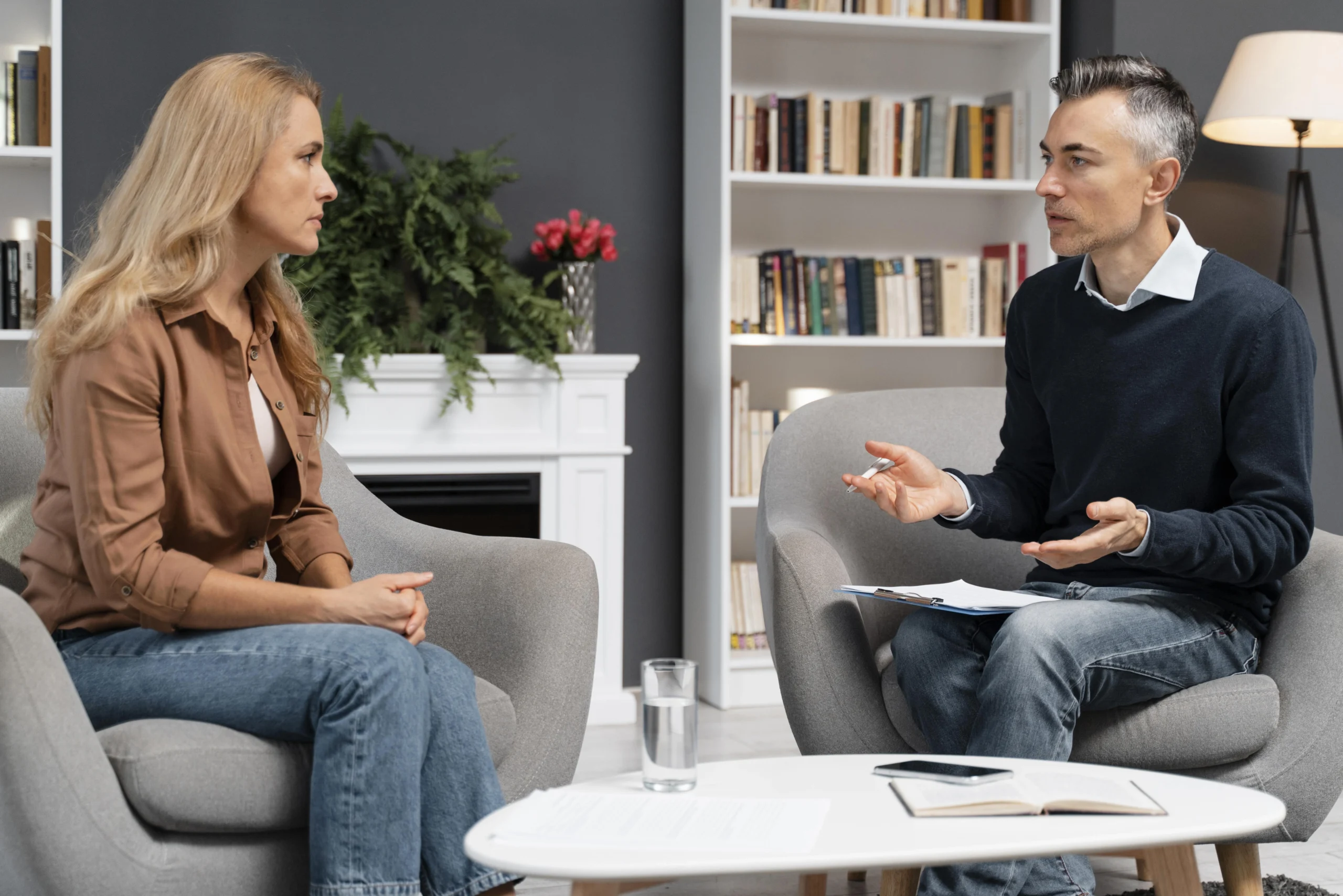
Feeling uncertain in a relationship that is objectively loving, respectful, and emotionally safe can be deeply confusing especially for professionals who are otherwise decisive, capable, and self-aware. You may find yourself asking, “Why do I feel uneasy when nothing is actually wrong?” or “If this relationship is good, why can’t I relax into it?”
This article explores that question in depth without clichés, without romanticised nonsense, and without reducing it to “commitment issues.” We look at the psychological, professional, and identity-level factors that quietly drive this fear, particularly among high-performing individuals.
Understanding the Paradox Safety Can Feel Scarier Than Chaos
For many professionals, safety in relationships is unfamiliar territory. If your earlier relational experiences romantic or otherwise were marked by unpredictability, emotional intensity, or conditional approval, a calm and stable connection can feel strangely unsettling.
The nervous system adapts to what it knows. When chaos has been normalised, stability can register as absence, not security. This creates a paradox where a healthy relationship feels emotionally flat or “wrong,” even when it meets every rational criterion of a good partnership.
This is not intuition warning you of danger. It is often pattern withdrawal the discomfort of no longer operating in emotional survival mode.
Recent article click on here “Why “Losing Feelings” Isn’t the Real Reason Professionals Leave Good Relationships”
Why High-Achieving Professionals Are Especially Prone to This Fear
Professionals who excel in demanding careers often develop identities built on autonomy, self-regulation, and performance. These traits are rewarded in the workplace but they complicate emotional intimacy.
When a relationship is genuinely safe:
- There is no need to prove worth
- No emotional volatility to manage
- No constant adaptation required
For someone accustomed to earning security through competence and control, this can feel disorienting. The relationship no longer mirrors the professional world where effort equals outcome.
As a result, the mind searches for a problem because effort without struggle feels undeserved.
The Fear Is Often About Identity, Not the Relationship
One of the most overlooked reasons people doubt good relationships is identity destabilisation.
When you’ve built your sense of self around independence, resilience, and self-containment, deep emotional safety introduces a new question: Who am I when I don’t have to be “on” all the time?
This is especially common among:
- Senior professionals
- Entrepreneurs
- Creatives with strong internal worlds
- Individuals who matured early due to responsibility
The fear is not that the relationship is wrong but that it requires a softer, less defended version of you that you haven’t fully integrated yet.
Attachment Patterns Don’t Always Look Like Dysfunction
Popular psychology often oversimplifies attachment styles. In reality, many professionals present as emotionally intelligent and secure yet still carry avoidant or anxious undercurrents that surface only in safe intimacy.
You may:
- Overanalyse compatibility despite shared values
- Feel “bored” where there is peace
- Confuse emotional steadiness with lack of passion
- Worry that something essential is missing
These are not red flags about your partner. They are signals of internal conflict between attachment needs and self-protective habits formed earlier in life.
When “Something Feels Off” Is Not Intuition
Intuition is calm, specific, and grounded. Anxiety is loud, vague, and repetitive.
Many professionals mistake anxiety for intuition because they are trained to trust internal alerts. But relational anxiety often asks abstract questions:
- What if I’m settling?
- What if this isn’t “it”?
- What if I wake up one day and regret this?
True intuition, by contrast, points to observable misalignments values, respect, boundaries, or behaviour.
If your doubts lack concrete evidence and intensify during moments of closeness rather than conflict, they are more likely rooted in fear of emotional permanence, not relational incompatibility.
The Professional Mind Struggles With Emotional Ambiguity
In professional life, uncertainty is managed through data, forecasting, and optimisation. Relationships do not operate on the same logic.
You cannot:
- Benchmark emotional fulfilment
- A/B test long-term compatibility
- Optimise intimacy through analysis
For professionals accustomed to control, this lack of measurable certainty can feel intolerable. The mind keeps scanning for reassurance that cannot be intellectually obtained.
This leads to overthinking, self-doubt, and the false belief that a better option must exist simply because certainty has not been achieved.
Fear of Future Selves and the Weight of Long-Term Decisions
Another quiet driver of relational fear is future projection.
You are not just evaluating your partner you are imagining:
- Your life trajectory
- Career evolution
- Identity shifts
- Emotional needs five or ten years from now
For ambitious individuals, the fear is not about the present relationship but about being constrained by a version of yourself that no longer exists in the future.
This creates an internal tension between commitment and self-expansion, even when the partner is supportive of growth.
Emotional Safety Exposes Unprocessed Inner Work
A loving relationship often becomes the first space where unresolved internal issues surface because it is finally safe enough for them to emerge.
You may notice:
- Restlessness during emotional closeness
- A sense of emptiness despite affection
- A desire to emotionally withdraw for no clear reason
These experiences are frequently misattributed to the relationship itself. In reality, safety removes distractions and forces you to confront parts of yourself that were previously suppressed by busyness, ambition, or emotional self-reliance.
How to Differentiate Real Misalignment From Fear-Based Doubt
A useful distinction lies in direction.
- Misalignment pulls you away from yourself you feel smaller, constrained, or compromised.
- Fear-based doubt pulls you inward you feel exposed, uncertain, and emotionally activated.
Ask yourself:
- Do I feel unsafe expressing who I am or simply unfamiliar with being fully seen?
- Does this relationship restrict my growth or does it challenge my defences?
These questions reveal far more than endless mental comparisons or imagined alternatives.
Why This Fear Often Appears When Things Are “Going Well”
Ironically, doubt often intensifies at moments of stability when commitment deepens, routines form, or future planning begins.
This is because safety signals continuity. And continuity demands emotional presence.
For many professionals, emotional presence not love is the true vulnerability.
You Don’t Need to Feel Certain to Be Aligned
One of the most damaging myths about relationships is that clarity should feel absolute.
In reality, emotionally healthy relationships often coexist with:
- Periodic doubt
- Ambivalence during transitions
- Fear alongside attachment
The absence of fear is not the marker of a right relationship. The ability to stay present despite fear often is.
Final Reflection
If you fear your relationship isn’t right despite it being loving and safe, the question may not be “Is this the right relationship?”
It may be:
“Am I ready to be fully seen without performing, controlling, or self-protecting?”
For high-functioning professionals, that question can be more confronting than any external incompatibility.
And answering it slowly, honestly, and without rushing to conclusions is often where real emotional maturity begins.


