
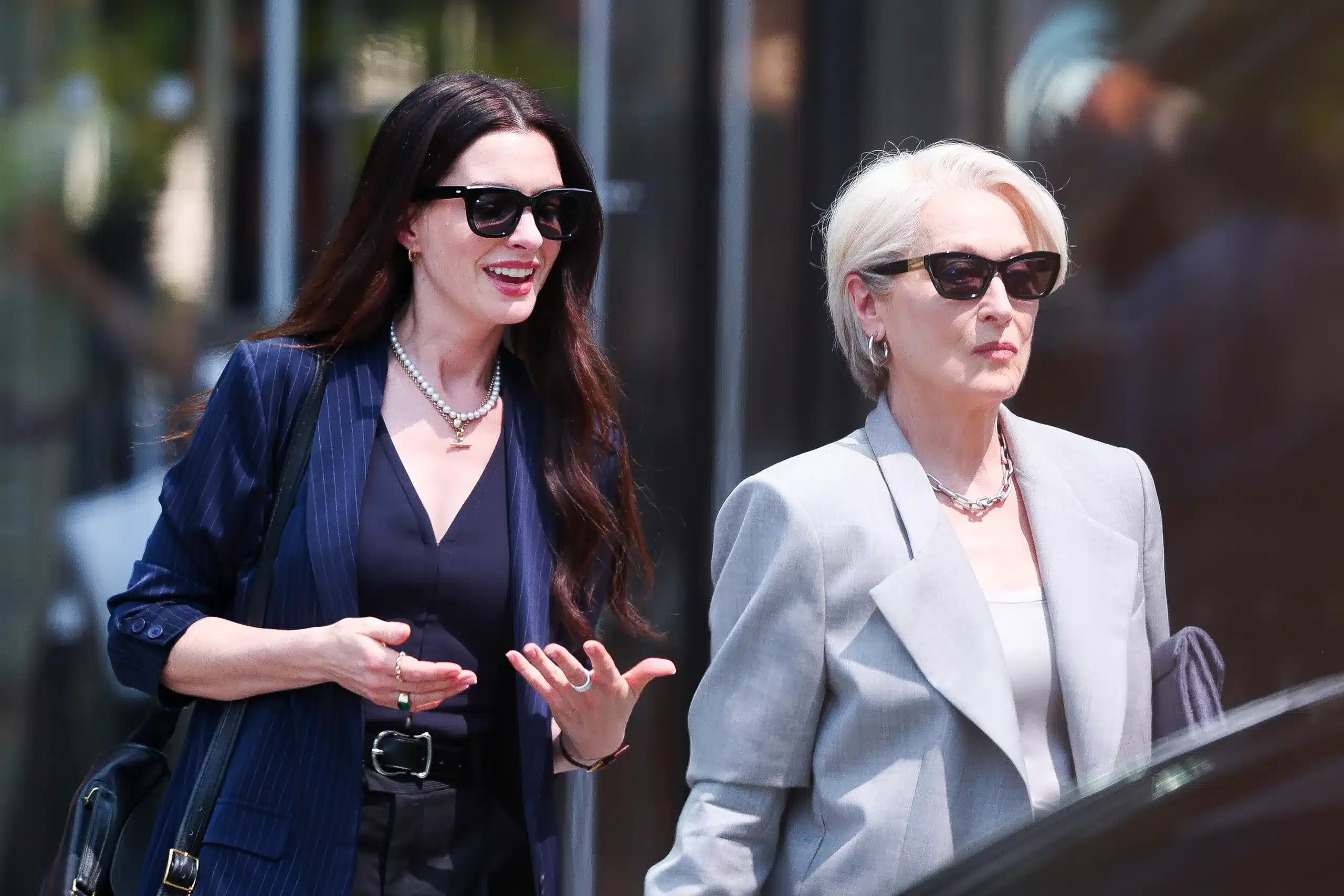
The Devil Wears Prada is often remembered as a stylish film full of sharp dialogue, impossible standards and unforgettable coats. But its real staying power comes from something deeper than fashion fantasy.
It is not only a film about clothes. It is a film about how women are read through clothes.
Nearly two decades later, its images still feel familiar: Miranda Priestly walking into the office with cold precision, Andy Sachs slowly transforming from outsider to fashion-world participant, and Runway magazine operating like a kingdom where clothing is never casual. Every outfit speaks before the character does.
That is why the film still matters. Beneath the glamour, it shows how fashion gives different meanings to women depending on age, power and position. Miranda's wardrobe signals authority, discipline and control. Andy's wardrobe signals transformation, belonging and approval. One woman is expected to appear untouchable. The other is expected to become acceptable.
That contrast still shapes how women are seen in fashion culture today.
- Structured silhouettes and immaculate layering
- Neutral palette — icy glamour, restrained luxury
- Does not dress to be liked. Dresses to be understood.
- Wardrobe announces she has already arrived
- Restraint used as status — no visible effort
- Wardrobe marks her as an outsider at the start
- Fashion evolution as professional entry and belonging
- Becomes more visible only after becoming more acceptable
- Learns the code, wears the code, is finally read differently
- Style becomes proof that she has understood the rules
Why The Devil Wears Prada Still Lives in Fashion Conversations
Some fashion films fade into nostalgia. The Devil Wears Prada has not.
Part of that is because the clothes remain visually memorable. The coats, boots, bags, sunglasses and office looks still appear in fashion references, social media edits and workwear conversations. But the reason the film continues to feel relevant is not only because the styling was beautiful. It is because the wardrobe was doing the storytelling.
The film understands that clothes are never just decoration in women's professional lives. They become evidence. Evidence of seriousness, taste, class, ambition and belonging. Andy is not treated as fully credible until her clothes begin to speak the language of the workplace. Miranda is feared before she says a word because her appearance has already established hierarchy.
Many have experienced some version of it: the feeling that competence alone is not enough, that presentation must also be managed, that being good at the job still requires looking like someone who deserves the job. In this way, the film remains culturally sharp. It turns officewear into character, luxury into power and beauty into professional currency.
Miranda Priestly and the Fashion Language of Older Female Power
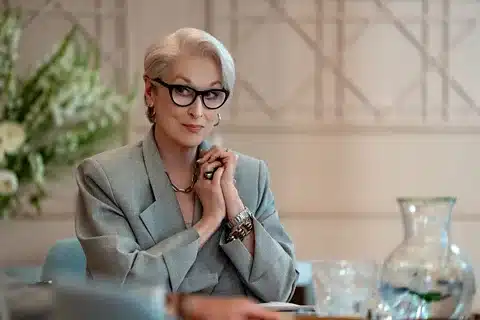
Miranda Priestly's wardrobe is one of the strongest examples of older female power in modern fashion cinema.
Her clothes do not chase trends. They do not ask for approval. They are controlled, precise and intimidatingly polished. Everything about her appearance suggests discipline: the structured silhouettes, the immaculate layering, the neutral palette, the icy glamour, the sharp accessories and the luxury that never feels chaotic.
Miranda does not dress to be liked. She dresses to be understood.
Her wardrobe tells the room that she has already arrived. She does not need transformation. She does not need validation. She is the standard everyone else is trying to reach.
That is what makes her fashion language so powerful. It uses restraint as status. There is no desperation in it. No visible effort. No softness offered unless she chooses it. The clothing becomes a kind of armour, not because it hides her, but because it protects her authority.
Older women in fashion narratives are often allowed power only when they appear composed, controlled and untouchable. They are rarely given the freedom to be playful, uncertain, experimental or relaxed. Their elegance must be disciplined. Their beauty must be timeless. Their authority must never look messy. This is why Miranda's wardrobe is both iconic and revealing. It shows the strength of a woman who commands through style, but also reflects the narrow visual code older women are often expected to follow if they want to be taken seriously.
That same idea appears in wider conversations around public elegance and controlled style, including Satynmag's discussion of Melania Trump and Queen Camilla's elegant fashion style, where restraint becomes part of public image and authority.
Women are read through clothes before they are fully heard. That is what The Devil Wears Prada understood — and what we are still working through.Why The Devil Wears Prada Still Matters
Andy Sachs and the Makeover Logic of Younger Women
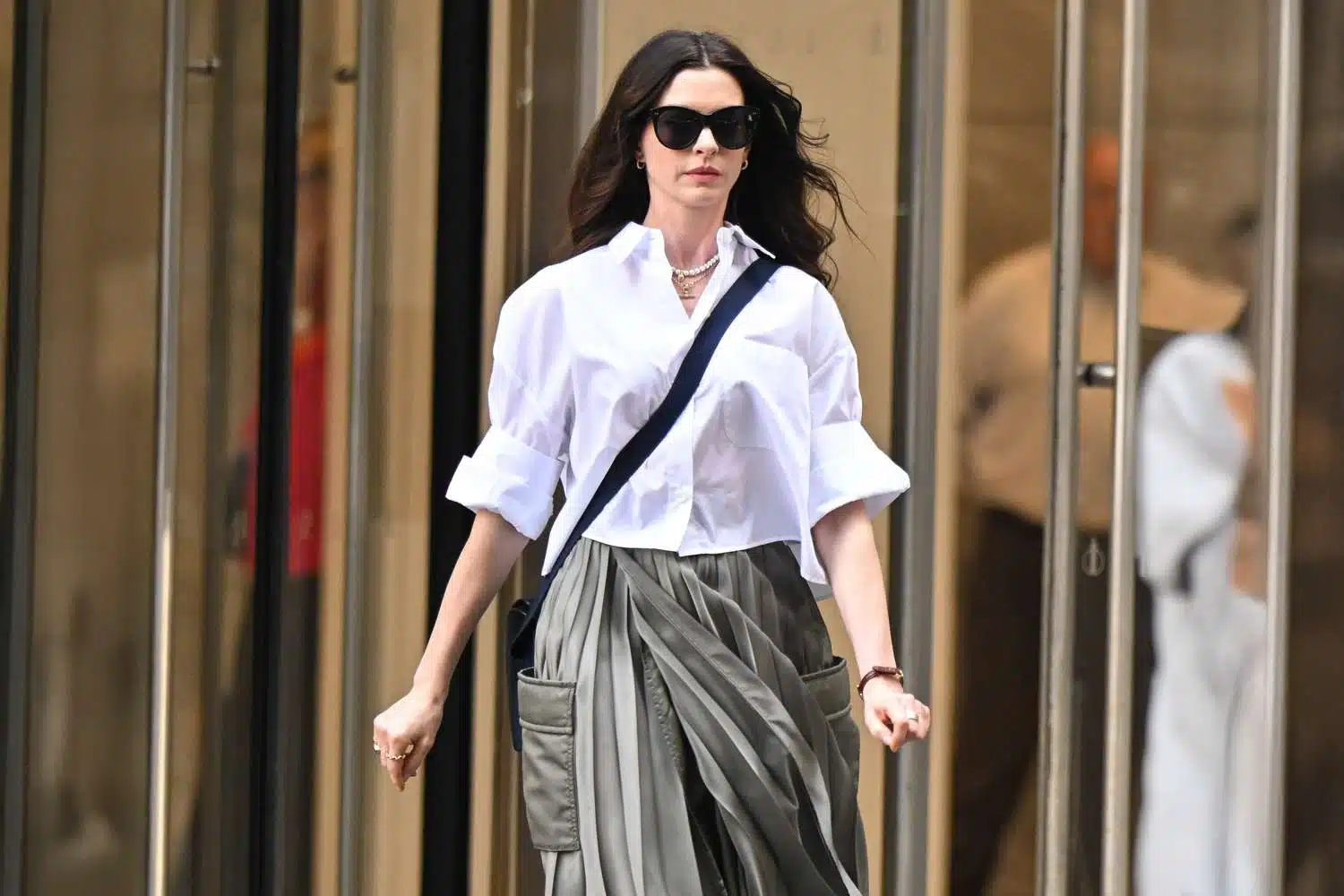
Andy Sachs' wardrobe arc is often described as a makeover. But it is more than that.
At the beginning, Andy's clothes mark her as an outsider. She is intelligent, educated and ambitious, but none of that protects her from being dismissed visually. In the world of Runway, not looking the part becomes almost the same as not understanding the work.
Her transformation is thrilling because the clothes are beautiful. But the deeper message is sharper: Andy becomes more visible only after she becomes more visually acceptable.
That matters because younger women are often shown as needing transformation before they are taken seriously. Their style becomes proof that they have learned the rules. The new boots, better coats and polished hair are not only fashion upgrades. They are signals of professional entry.
Andy's fashion evolution is about belonging. She learns the code, wears the code and is finally read differently because of it.
This is still deeply relevant. Many young women entering workplaces feel pressure to look polished enough, stylish enough, serious enough, modern enough and not too much of anything. They are expected to evolve visually while also proving they are competent. Their clothing becomes part of the test.
That is why Andy's transformation is complicated. It is satisfying to watch, but it also raises a question: why did she need to change her appearance before people recognised her ability?
How Fashion Treats Older and Younger Women Differently
The film's generational contrast is one of its most interesting layers.
Miranda's wardrobe is already complete. Andy's wardrobe is still becoming.
- Why are older women so rarely allowed softness or play in fashion storytelling?
- Why must their power always look disciplined?
- Why are younger women so often expected to become someone else before being fully seen?
- Why is ageing tied to control, while youth is tied to approval?
These questions matter because style is not neutral. It shapes how women are interpreted. This is why modern fashion conversations around intentional dressing feel so important. Satynmag has explored this shift in Gen Z women rejecting fashion for meaningful wardrobes. Younger women are increasingly questioning whether style should be about approval or identity.
Is Miranda Powerful Because She Dresses That Way?
One of the most interesting questions the film leaves behind is whether Miranda is powerful because she dresses that way, or whether the wardrobe itself helps create the power.
The answer is both.
Miranda has authority because of her position, experience and reputation. But her wardrobe turns that authority into something visible. The clothes make power immediate. They give her presence before she speaks. They create distance, hierarchy and control.
This is fashion as armour.
For women in leadership, clothing often works this way. A polished appearance can protect against dismissal. It can create credibility before competence has been demonstrated. It can make a woman appear prepared, controlled and serious.
But there is a cost. Women are still judged by presentation in ways men often are not. A man can appear powerful through title alone. A woman often has to manage title, tone, expression, body language and clothing all at once.
This is why Miranda's wardrobe feels so commanding. It shows how carefully female authority is constructed. Her clothes are not separate from her power. They are part of its architecture.
The elegance of legacy dressing also connects with Satynmag's article on Gauravi Kumari reviving Gayatri Devi's elegance, where inherited style becomes a language of memory, status and identity rather than simple decoration.
What the Film Says About Fashion and Female Ambition
At its core, The Devil Wears Prada is about ambition and the price of entering powerful spaces.
Fashion in the film is aspiration, but it is also conformity. It opens doors, but only after Andy learns to obey its visual rules. It gives her confidence, but also pulls her deeper into a world where success requires performance.
That is what makes the film still feel honest. Many women know that ambition is rarely judged on work alone. It is judged through appearance, tone, likeability and polish. A woman must look ambitious, but not desperate. Stylish, but not vain. Powerful, but not cold. Young, but not careless. Mature, but not invisible.
The film captures this impossible balance beautifully.
Miranda has mastered the performance of power, but at the cost of emotional distance. Andy learns the performance of belonging, but begins to question what she is losing. Both women reveal different sides of the same system.
Fashion gives them access, identity and control. But it also becomes a mirror of what the world demands from them.
What Older and Younger Women Can Reclaim Now
The most useful way to read The Devil Wears Prada today is not to choose between Miranda and Andy. It is to understand what both wardrobes reveal.
- Playfulness and softness without losing authority
- Boldness, experimentation or relaxed dressing
- The right to look warm, not only untouchable
- Power that does not always have to look cold to be real
- Fashion as identity expression, not just approval-seeking
- The right to be taken seriously before visual transformation
- Style that belongs to them, not to the room's expectations
- Belonging that does not require becoming someone else first
Both generations can reclaim style from the scripts placed on them.
A woman's wardrobe can be professional without being a costume. Elegant without being restrictive. Fashionable without being performative. Comfortable without being careless. Personal without needing to explain itself.
That is the modern lesson the film leaves behind.
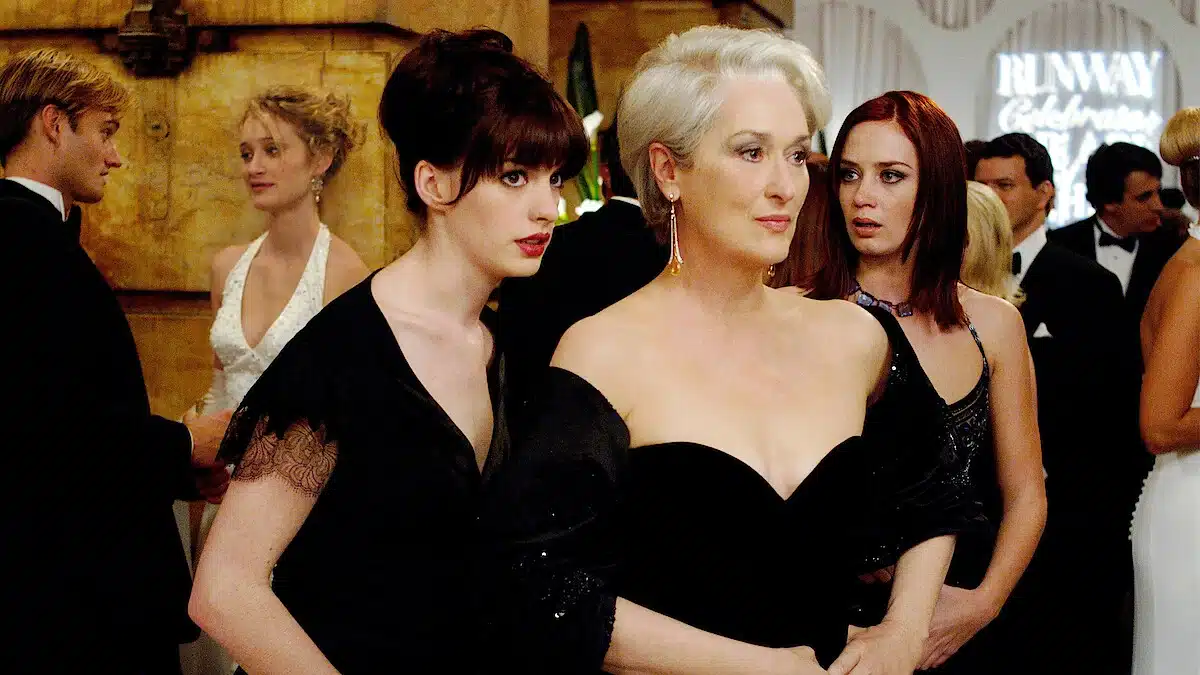
The Devil Wears Prada still matters because it understood something fashion culture continues to wrestle with: women are read through clothes before they are fully heard. Miranda Priestly's wardrobe shows how older female power is coded through restraint, precision and control. Andy Sachs' transformation shows how younger women are often expected to visually evolve before being accepted. Together, they reveal how fashion can shape authority, ambition, belonging and identity. The film is not only about beautiful clothes. It is about what those clothes are made to mean.
And that is why we still return to it. Not just for the coats, the boots or the sharp lines, but because it continues to show how women navigate a world that watches what they wear and decides who they are.
Not just for the coats and the sharp lines — but because it shows how women navigate a world that watches what they wear and decides who they are.
For more fashion, beauty and women-focused lifestyle stories, visit Satynmag.com