Fashion & Beauty
Four Royal Eras, One Magnificent Tiara: Kate Middleton’s Elegant Moment
Before Princess Diana made it famous and Kate Middleton brought it back into the spotlight, the Lover’s Knot Tiara belonged to two British queens. Now, more than a century after it was created, Catherine has paired this magnificent diamond-and-pearl heirloom with an elegant yellow Elie Saab gown at Windsor Castle. We look at the four royal eras behind one of Britain’s most beautiful tiaras.
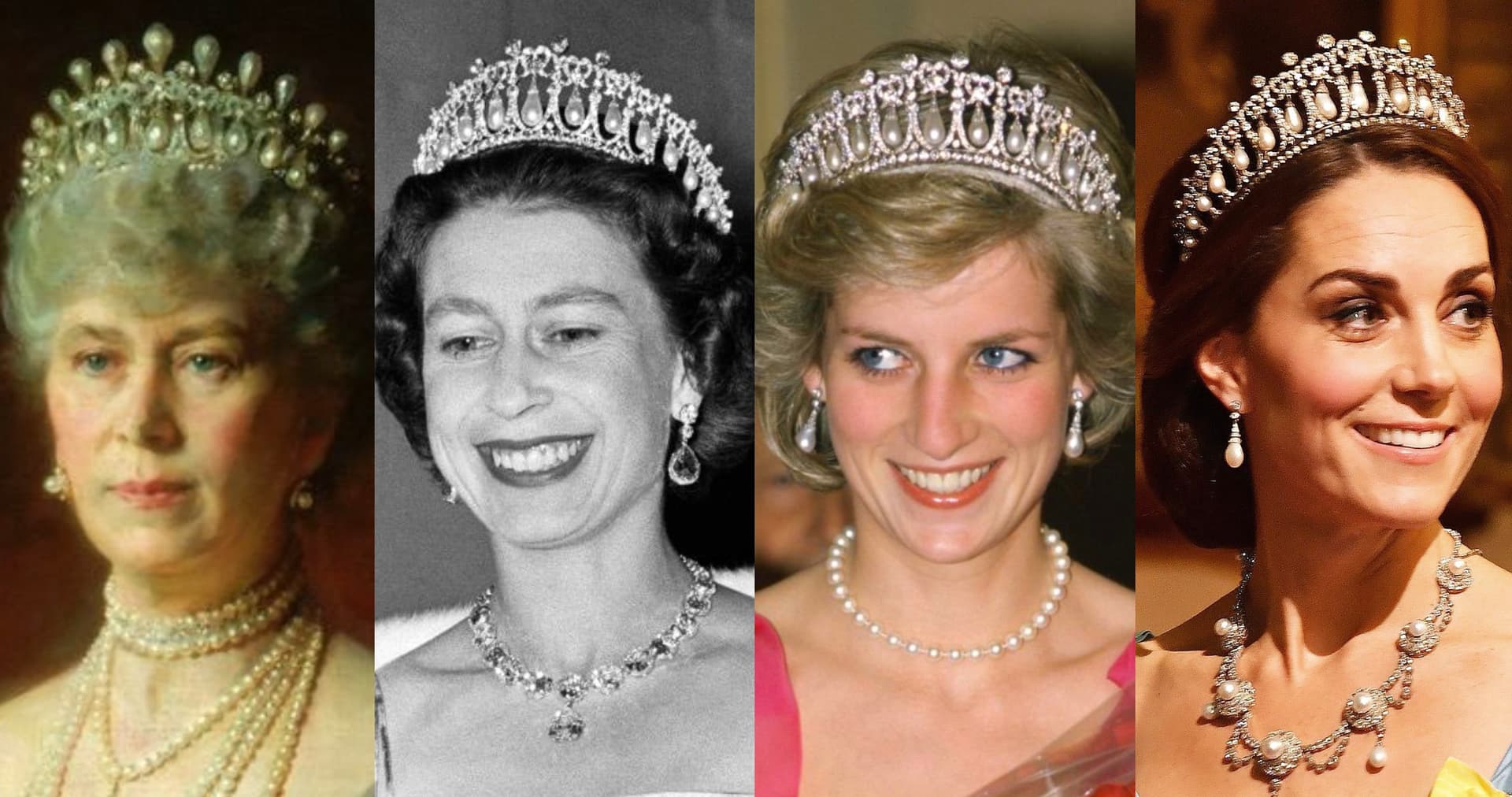
Do you remember Princess Diana wearing that beautiful diamond-and-pearl tiara? The delicate pearls hanging beneath its glittering arches became one of the most memorable images of her royal wardrobe. Decades later, Catherine, Princess of Wales, has brought the same jewel back into the spotlight, this time with a flowing yellow Elie Saab gown that made her latest appearance at Windsor Castle particularly beautiful. Yet the story of this tiara began long before either princess wore it.
Queen Mary’s Lover’s Knot Tiara has now passed through four remarkable chapters of royal fashion, from Queen Mary’s Edwardian elegance to Queen Elizabeth II’s formal royal wardrobe, Diana’s glamorous 1980s evenings and Catherine’s modern interpretation of royal dressing. Each woman belonged to a different fashion era, with different hairstyles, gowns and ways of wearing jewellery. What makes this story interesting is how comfortably the same tiara has belonged to all four.
It All Began With Queen Mary and Her Love of Extraordinary Jewellery
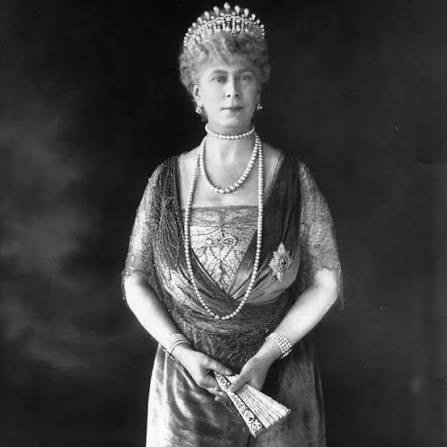
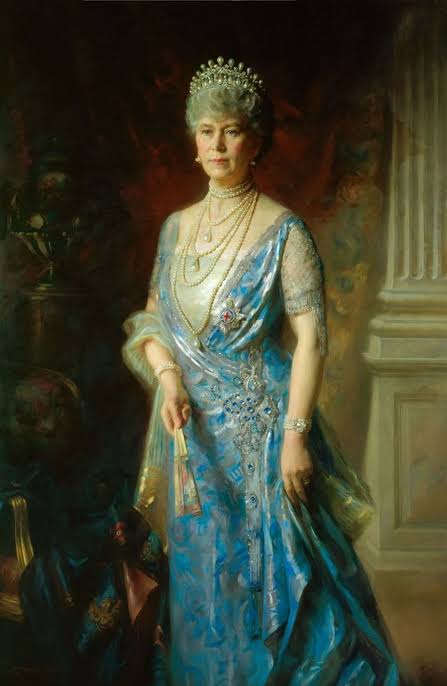
Queen Mary was one of the British royal family’s great jewellery collectors, with a remarkable eye for historic pieces and elaborate craftsmanship. In 1913, she commissioned the London jewellery house Garrard to create a tiara inspired by the earlier Cambridge Lover’s Knot Tiara, a jewel associated with her family. Completed around 1914, her version combined diamonds and pearls in an intricate arrangement that reflected the grandeur of early twentieth-century royal fashion.
The design takes its name from the lover’s knot motif, a decorative pattern traditionally associated with enduring affection. Diamond arches rise above a row of suspended pearls, while small knot-shaped details give the piece its distinctive appearance. Originally, Queen Mary’s tiara also featured upright pearls along the top, creating an even more elaborate silhouette. Those upper pearls were later removed, leaving the graceful arrangement of hanging pearls that makes the tiara so recognisable today.
In Queen Mary’s era, elaborate jewellery was an essential part of formal royal dressing. Her high hairstyles, structured gowns and layers of magnificent jewels suited the scale of the tiara beautifully. It was not designed to be a delicate little accessory but a grand piece that could hold its own among the diamonds and pearls of an important royal occasion.
Queen Elizabeth II Gave the Tiara Its Next Chapter
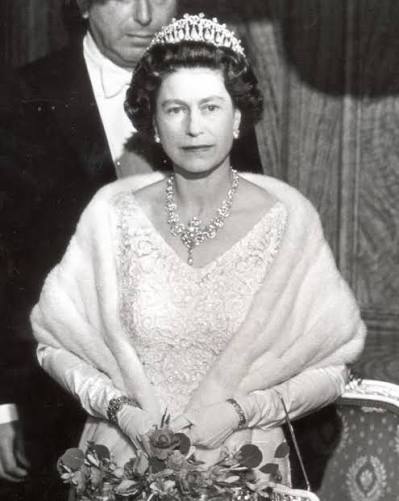
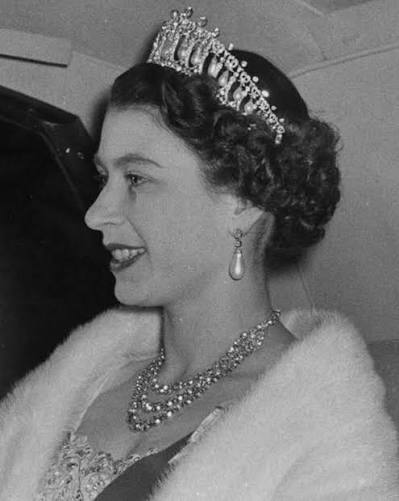
When Queen Mary died in 1953, the tiara passed to her granddaughter, Queen Elizabeth II. The young monarch was entering a very different fashion period, when royal eveningwear was becoming more refined in silhouette but remained wonderfully formal. Beautiful gowns, carefully arranged hairstyles, diamond necklaces and elaborate earrings were still part of the visual language of the monarchy.
Queen Elizabeth wore the Lover’s Knot Tiara on several occasions during the earlier years of her reign, including appearances in the 1950s. Photographs of the young Queen wearing it show how well its pearls and diamond arches suited the beautifully arranged hairstyles and formal gowns of that decade. The same jewel that had accompanied Queen Mary’s grand Edwardian wardrobe now belonged naturally to the elegance of mid-century fashion.
For Queen Elizabeth, it was one magnificent piece among an extraordinary collection of royal jewellery. However, its most famous years were still ahead. When Diana Spencer married Prince Charles in 1981, the Queen made the Lover’s Knot Tiara available to her new daughter-in-law, beginning a chapter that would change how generations of women remembered it.
Continue your growth
Turn useful reading into career momentum.
Explore expert resources, workshops and professional support inside Satyn Circle.
Join Satyn CircleThen Princess Diana Made the Pearls Unforgettable
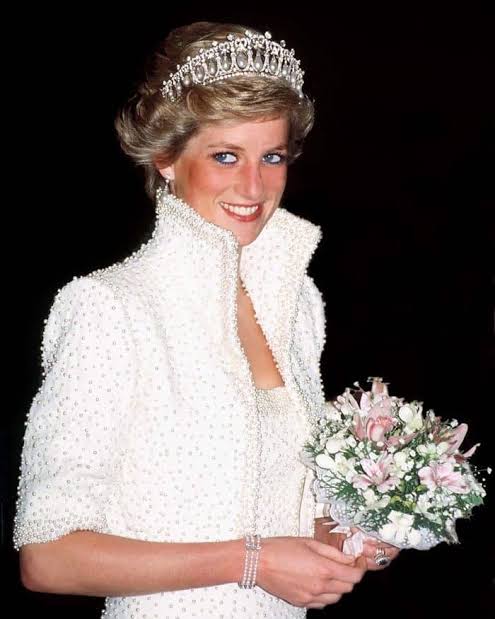
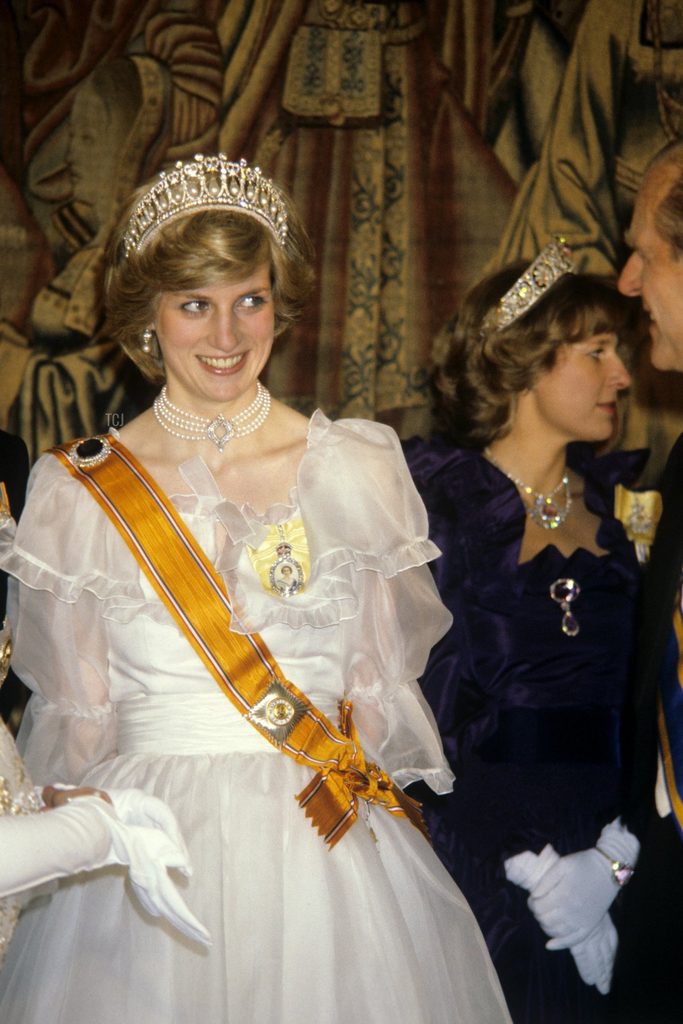
For many women who followed royal fashion in the 1980s, the Lover’s Knot Tiara will always be associated with Princess Diana. Although she wore her own family’s Spencer Tiara on her wedding day, she later wore Queen Mary’s jewel to formal dinners, diplomatic occasions and royal engagements. With her short blonde hair, beautiful evening dresses and love of pearls, Diana gave the historic tiara a new visual identity.
One of its most memorable appearances came during Diana’s 1989 visit to Hong Kong. She paired it with a spectacular white Catherine Walker evening ensemble covered in pearls and sequins, complete with a dramatic high-collared jacket. The outfit became affectionately known as her Elvis dress, and the Lover’s Knot Tiara was a magnificent finishing touch.
The look was everything we remember about glamorous royal fashion during that period. The bright white outfit, thousands of shimmering embellishments and diamond-and-pearl tiara created a memorable image that still appears in fashion retrospectives today. Diana also wore the tiara with other evening gowns, demonstrating how the same historic jewellery could work with very different colours and silhouettes.
Following Diana’s divorce in 1996, the tiara was returned to the royal collection. It remained out of the public spotlight for years, but its association with her never disappeared. For many royal fashion enthusiasts, seeing those hanging pearls was enough to bring back memories of Diana’s most elegant evenings.
Catherine’s Turn Came in 2015
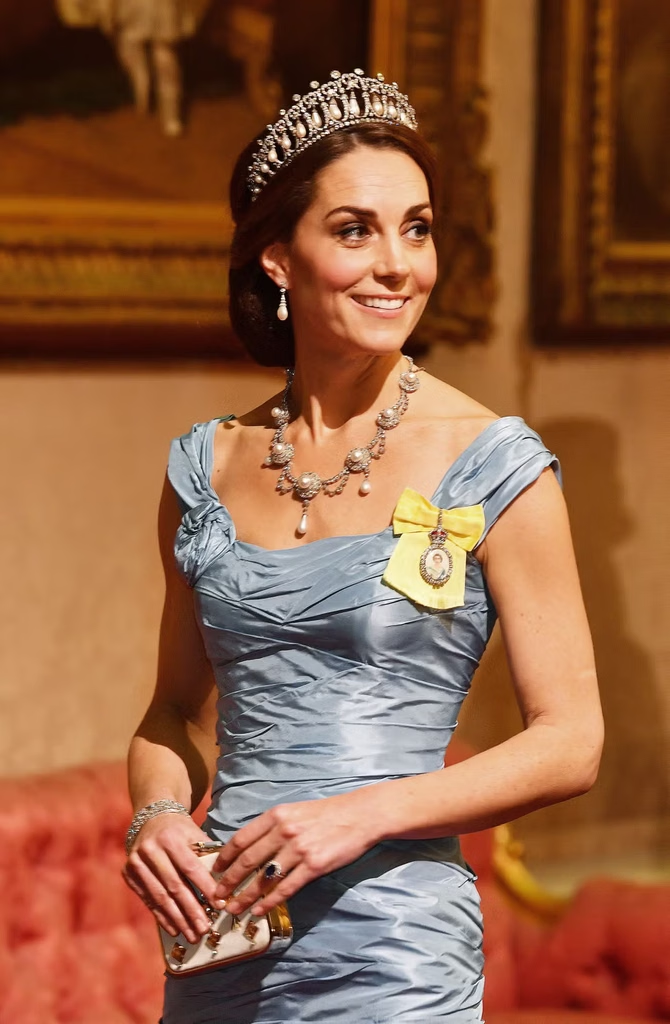
Catherine first appeared publicly wearing Queen Mary’s Lover’s Knot Tiara at the annual diplomatic reception at Buckingham Palace in December 2015. It was an important addition to her formal royal wardrobe, especially because of the jewel’s close association with Diana. By then, Catherine had already established her preference for elegant evening gowns, carefully coordinated accessories and jewellery that complemented rather than overwhelmed her clothes.
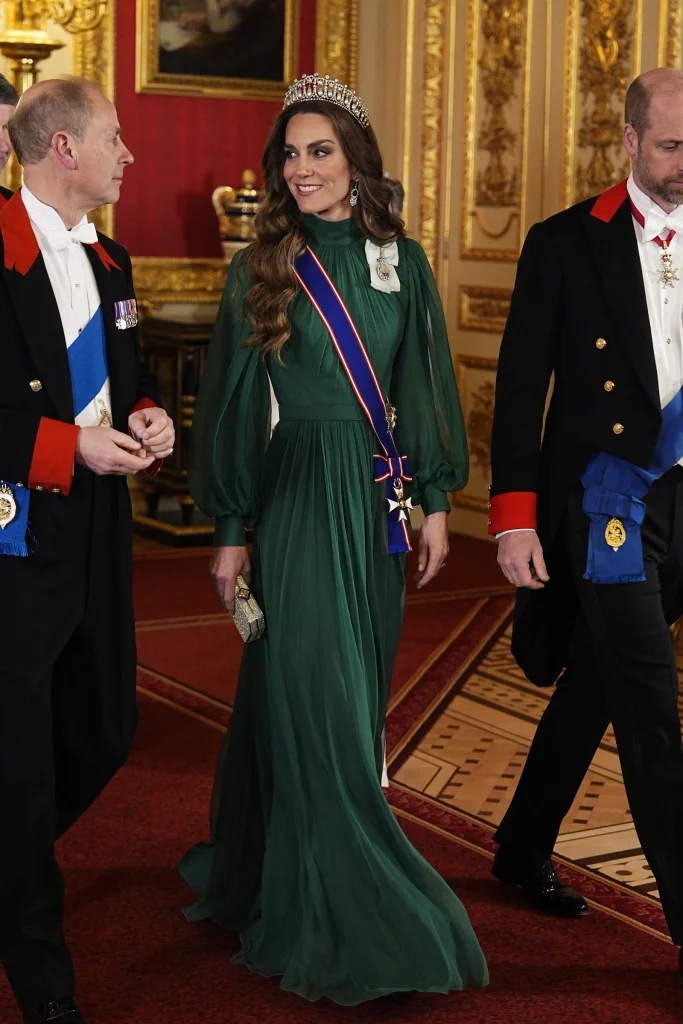
Over the following years, the Lover’s Knot gradually became one of Catherine’s most frequently chosen tiaras. She has worn it for diplomatic receptions, state banquets and other major royal occasions, often with beautifully structured or flowing evening gowns. The fashion history connecting Catherine with Diana includes several memorable references, but the tiara feels particularly special because it is the actual jewel worn by both women rather than simply a similar design.
Catherine is now continuing a jewellery tradition that stretches back more than a century. She does not need to reproduce the formal styling of Queen Mary or the glamorous evening looks associated with Diana. Instead, she allows the tiara to sit comfortably within her own wardrobe, giving it another recognisable royal identity.
And Now, That Elegant Yellow Elie Saab Gown at Windsor Castle
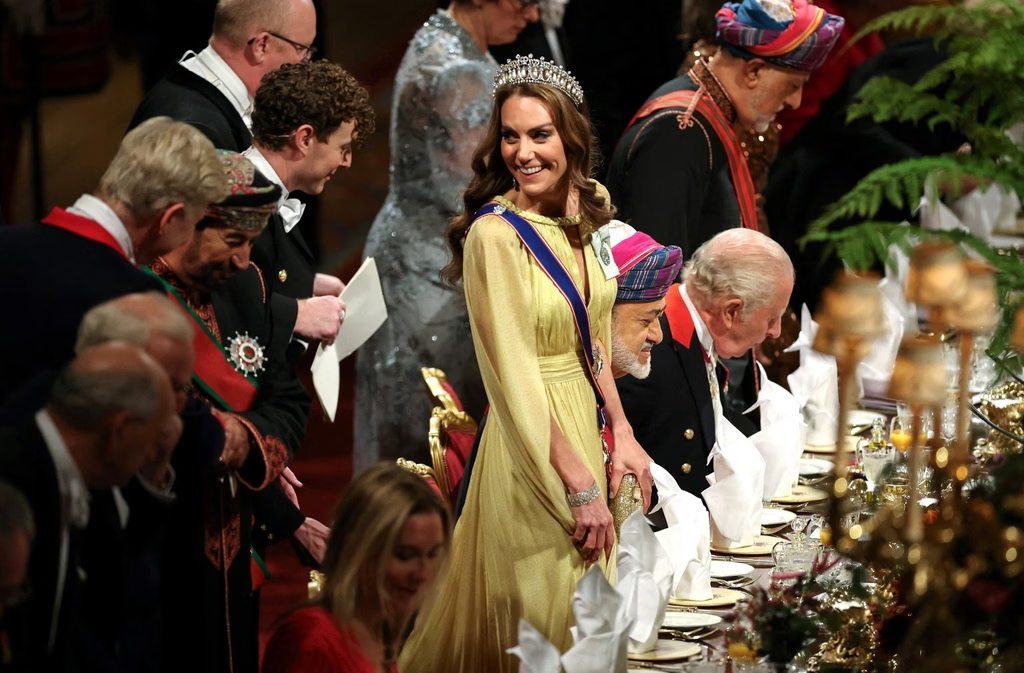
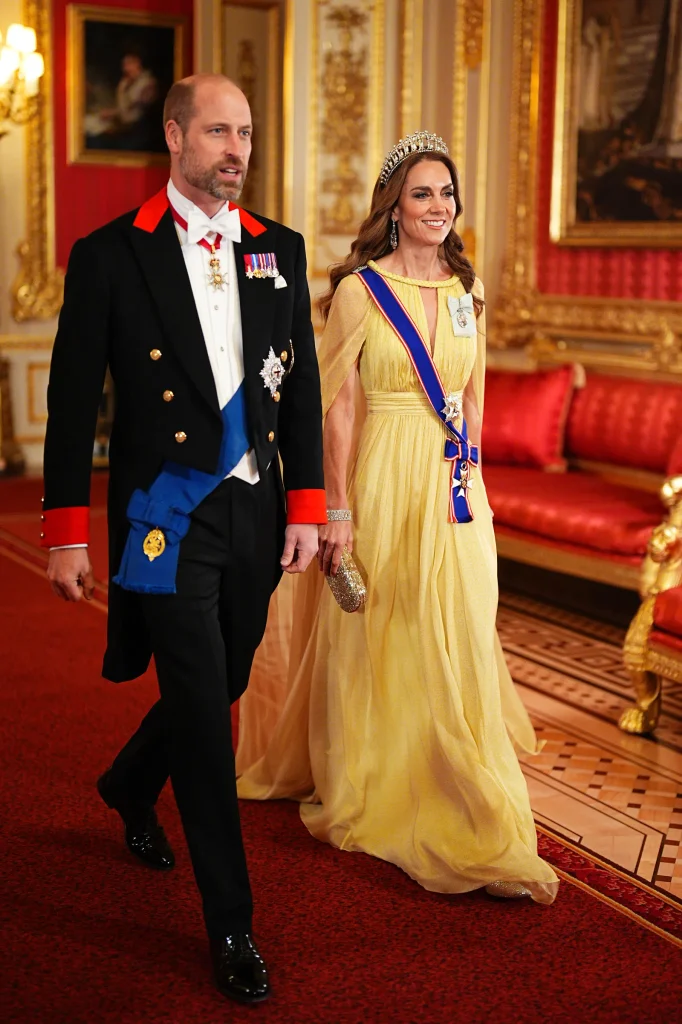
On 20 October 2026, Catherine attended the state banquet at Windsor Castle honouring Sultan Haitham bin Tarik of Oman. For the occasion, she chose a pale yellow Elie Saab gown from the designer’s Spring/Summer 2025 ready-to-wear collection. The dress was romantic without being overly decorative, making it an interesting partner for such an elaborate historic tiara.
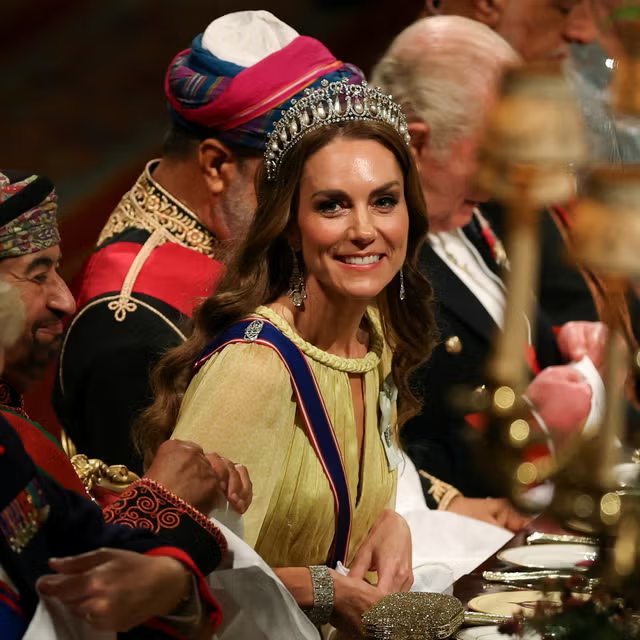
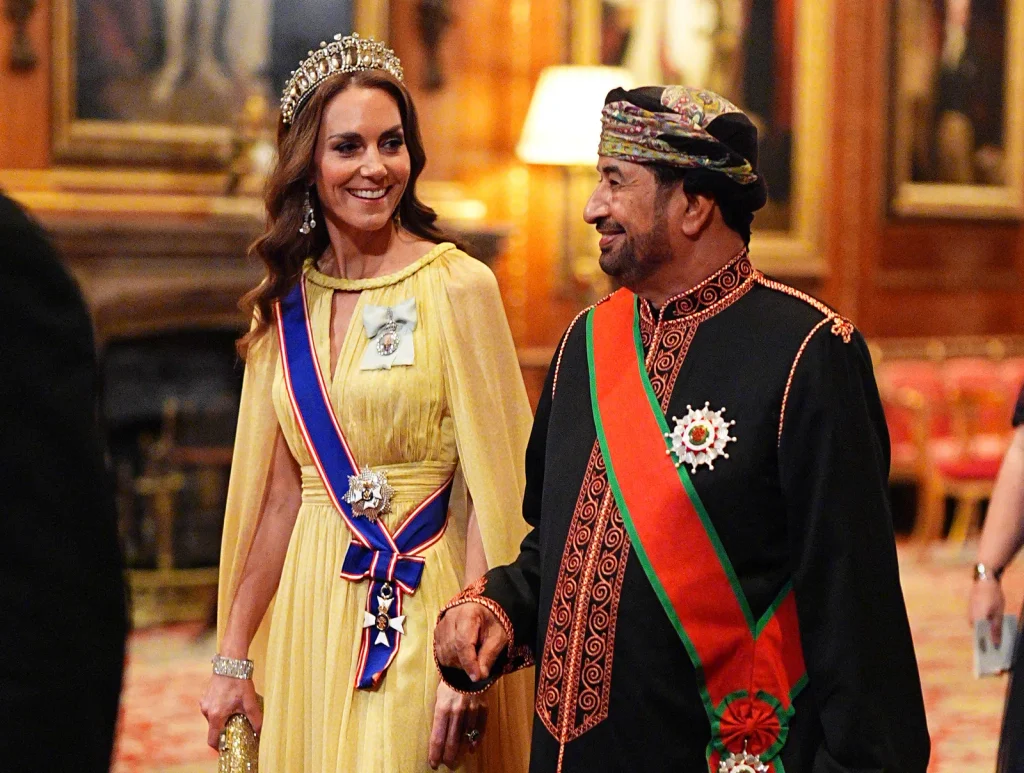
The gown featured a beautifully braided neckline with a small keyhole opening at the front, a softly defined waist and a long pleated skirt. Its flowing cape created movement around the shoulders and down the back, giving the dress a graceful appearance as Catherine walked. The soft yellow colour was particularly effective beside the brilliant diamonds and luminous pearls of the Lover’s Knot Tiara.
There was also a subtle pattern within the fabric, a detail that became more apparent when the dress was viewed closely. Rather than covering the gown with heavy embroidery or additional sparkling embellishments, Elie Saab allowed the draping, pleats and flowing fabric to provide much of its beauty. The result was an evening dress that looked sophisticated while still leaving room for the historic jewellery to shine.
Catherine’s Windsor Castle appearance in the yellow Elie Saab gown was completed with diamond chandelier earrings, Queen Mary’s diamond choker bracelet and a sparkling gold Anya Hindmarch clutch. She also wore her royal orders and decorations, as required for the formal occasion. The combination brought together jewels from earlier generations with a contemporary designer gown.
Why the Tiara and the Yellow Dress Worked So Beautifully Together
The most interesting part of Catherine’s styling was how differently the two main pieces expressed elegance. The Lover’s Knot Tiara is ornate, formal and wonderfully detailed, with diamond arches and pearls that draw attention immediately. The Elie Saab gown, by contrast, is soft and fluid, relying on draping and movement rather than heavy decoration.
That contrast made the combination work. The pale yellow colour provided a gentle background for the white pearls, while the braided neckline introduced enough detail to make the gown interesting on its own. The cape brought a sense of occasion without competing with the shape of the tiara, and Catherine’s loose, softly styled hair made the historic jewel feel less severe.
There is a useful fashion lesson in the way the look came together. Elaborate jewellery does not always need an equally elaborate dress, and a beautiful gown does not necessarily need a necklace to complete it. Sometimes the most elegant decision is allowing one extraordinary accessory to remain the focus.
Four Women, Four Eras and an Elegance That Has Lasted
What makes Queen Mary’s Lover’s Knot Tiara remarkable is not simply its age or the value of its diamonds and pearls. It is the way the jewel has adapted to changing ideas of royal fashion without losing its original character. Queen Mary wore it during an age of grand ceremonial jewellery, Queen Elizabeth II made it part of her mid-century royal wardrobe, Diana transformed it into a fashion icon of the 1980s, and Catherine continues to bring it into modern royal dressing.
There is also something lovely about how differently each woman has worn it. Hairstyles have changed, evening gowns have become softer or more structured, and the rules of fashion have moved through entire generations. Yet the graceful arches and suspended pearls still look entirely at home at a royal banquet.
Catherine’s latest appearance offers another chapter in that long history. Her yellow Elie Saab gown belongs unmistakably to today’s fashion world, while the tiara carries the memories of three remarkable royal women who wore it before her. Together, they show why beautiful jewellery can remain relevant long after the fashions surrounding it have changed.
More than a century after Queen Mary commissioned it, the Lover’s Knot Tiara has found another beautiful moment. And for those of us who remember Diana wearing those extraordinary pearls, seeing them shine again is a particularly special part of the story.
Share
Written by
Satyn Editorial