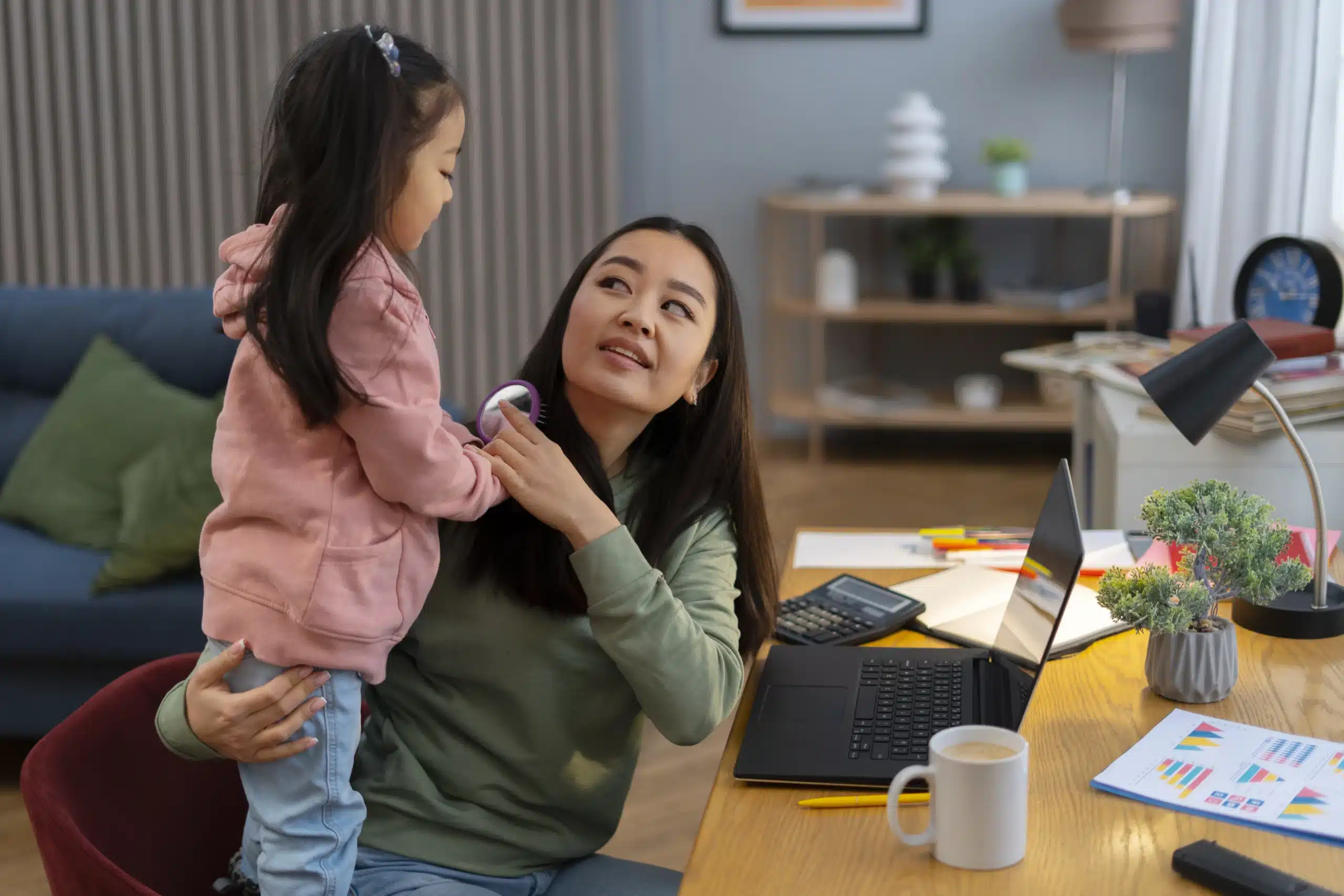
In most conversations about economic growth, leadership, and productivity, the discussion usually revolves around industries, innovation, or policy. Rarely does the spotlight fall on the quiet, continuous labour that sustains families and communities every single day. Yet behind functioning households, resilient children, and thriving societies lies a powerful but often overlooked force: maternal caregiving.
The work mothers do within homes and families is frequently invisible in economic reports and social metrics. It is rarely quantified, seldom compensated, and often taken for granted. But without it, the social structures that sustain economies, institutions, and communities would struggle to function.
Understanding the invisible work of mothers requires looking beyond traditional definitions of labour. Caregiving is not simply about childcare. It involves emotional management, household coordination, social development, and long-term human capital formation — all of which shape the future of society.
The Unseen Labour That Keeps Families Functioning
For many mothers, caregiving begins long before a child is born and continues well into adulthood. This work extends far beyond feeding, dressing, and supervising children.
A significant portion of maternal responsibility involves mental labour and emotional labour — two forms of work that are rarely acknowledged but constantly performed.
Mothers often manage the household cognitive load — remembering appointments, school schedules, medical needs, social commitments, and family responsibilities. This invisible coordination ensures that daily life runs smoothly for everyone else in the household.
Research in sociology frequently refers to this as the "mental load of motherhood." It includes anticipating needs before they arise and solving problems before they disrupt family stability.
Equally important is emotional regulation within the family unit. Mothers frequently act as emotional anchors — supporting children through developmental stages, helping partners navigate stress, and maintaining harmony within the home.
✦ Hidden but Fundamental
These contributions may not appear in productivity charts, but they are fundamental to family wellbeing, child development, and long-term social stability.
Caregiving as the Foundation of Human Development
One of the most powerful yet understated roles mothers play is shaping the emotional and psychological development of the next generation.
From infancy through adolescence, maternal caregiving influences attachment patterns, emotional intelligence, and cognitive development. Psychologists widely recognise that early caregiving environments affect how individuals build relationships, manage stress, and interact with society later in life.
Consistent nurturing, emotional responsiveness, and stability create what researchers call secure attachment — a key predictor of healthy emotional development.
✦
Resilience
Children in supportive caregiving environments develop the resilience needed to navigate life's challenges with confidence and clarity.
✦
Confidence
Secure early attachment fosters self-assurance — a quality that shapes academic success, career growth, and leadership potential.
✦
Interpersonal Skills
Strong caregiving environments build the social competence and emotional awareness needed for healthy relationships throughout life.
✦
Future Leadership
The work mothers do today directly shapes the future workforce, leadership pipelines, and social cohesion of tomorrow.
The effects of caregiving extend far beyond the home. They ripple into classrooms, workplaces, and communities.
If caregiving responsibilities performed by mothers were assigned market value, the global economic contribution would amount to trillions of dollars annually.
On the Economic Value of Unpaid Care Work
The Economic Value of Unpaid Care Work
Despite its enormous social impact, caregiving remains largely excluded from economic accounting systems. Traditional economic models measure productivity through wages, market output, and financial transactions. Because caregiving is often unpaid, it does not appear in national GDP calculations.
However, economists increasingly recognise that unpaid care work represents one of the largest hidden contributions to national economies.
Activities such as childcare, household management, elder support, and emotional caregiving replace services that would otherwise require significant financial expenditure. In practical terms, this means families and societies rely heavily on the unpaid labour of mothers to sustain social infrastructure.
✦ Reframing Value
Recognising the economic value of caregiving does not reduce motherhood to financial terms. Instead, it highlights how deeply this work supports broader systems of productivity and growth.
The Emotional Intelligence That Holds Families Together
Beyond logistics and childcare, maternal caregiving often involves a sophisticated form of emotional leadership.
Mothers frequently manage emotional climates within households. They notice subtle shifts in children's moods, recognise signs of stress or insecurity, and intervene with guidance, reassurance, or discipline when needed. This process develops what psychologists refer to as family emotional regulation.
By modelling empathy, communication, and patience, mothers teach children how to navigate complex emotional experiences. These lessons shape the social competence and emotional intelligence that individuals carry into adulthood.
In professional environments, emotional intelligence is increasingly recognised as a core leadership skill. Ironically, many of the earliest foundations for this skill are built through maternal caregiving at home.
Balancing Professional Ambition and Caregiving Responsibilities
In modern societies, many mothers are balancing professional careers alongside caregiving responsibilities. This dual role often requires extraordinary levels of time management, emotional resilience, and organisational skill.
Despite these challenges, research shows that maternal employment can positively influence children's development by modelling independence, ambition, and resilience.
However, the tension between career advancement and caregiving continues to highlight structural gaps in workplace support systems. Policies designed to address this include:
- Flexible work arrangements that respect both professional and family responsibilities
- Comprehensive parental leave that supports long-term family stability
- Family-friendly workplace cultures that normalise caregiving alongside career growth
- Accessible childcare systems that reduce the logistical burden on working mothers
Supporting mothers in balancing these responsibilities benefits not only families but also organisational productivity and workforce stability.
Caregiving is not simply a private responsibility confined to households. It is a form of social investment that strengthens communities and economies over time.
On Recognising Caregiving as Infrastructure
Why Societies Must Recognise the Value of Caregiving
Across cultures and economies, caregiving remains one of the most undervalued forms of work. Yet it is foundational to the development of healthy individuals and stable communities.
When societies acknowledge the importance of caregiving, they begin to shift perspectives around gender roles, social policy, and economic value.
Recognition can take many forms: workplace flexibility, parental support systems, accessible childcare, and broader cultural appreciation for the role of caregiving in societal progress.
Understanding caregiving as essential social infrastructure reframes the conversation around motherhood. It is not simply a private responsibility — it is a form of social investment that strengthens communities and economies over time.
The Quiet Power Behind Strong Societies
The most transformative forces in society are not always visible. They often exist in the quiet routines of daily life — conversations at dinner tables, bedtime reassurance after difficult days, and the steady guidance that shapes a child's sense of self.
Mothers perform this work consistently, often without recognition or acknowledgment. Yet through caregiving, emotional guidance, and everyday leadership, they nurture the very foundations of society.
Every resilient individual, empathetic leader, and confident professional carries traces of early caregiving influence.
✦ The Deeper Truth
Recognising the invisible work of mothers is not simply about appreciation. It is about understanding how societies are truly built — behind thriving communities and stable institutions lies a form of labour that rarely appears in statistics but remains indispensable: the enduring, transformative work of caregiving.
Invisible Labour
Maternal Caregiving
Unpaid Care Work
Mental Load
Emotional Intelligence
Work-Life Balance
Social Infrastructure
Women's Day Feature