
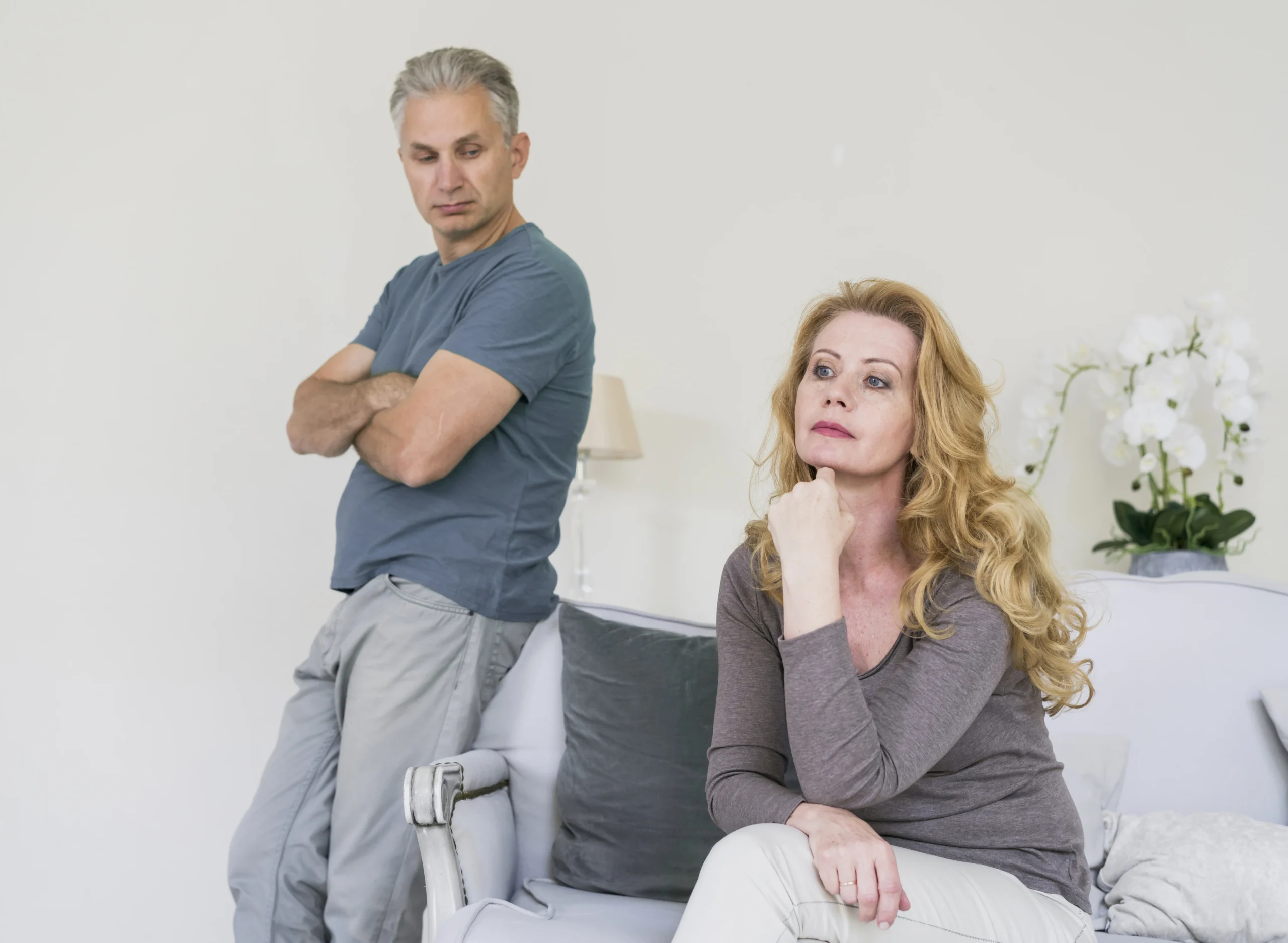
Emotional loneliness in marriage after 50 is more common than many people admit. Couples who have spent decades together often assume that long-term companionship naturally guarantees emotional security. Yet, this stage of life brings complex transitions—physical, psychological, relational, and social—that can quietly widen the emotional distance between partners. What was once a strong connection may start to feel muted, routine, or invisible. The shift is rarely sudden. It unfolds gradually, shaped by the realities of ageing, changing identities, and unmet emotional needs.
Understanding the causes is the first step to healing the disconnect. Emotional loneliness is not the absence of a partner; it is the absence of emotional resonance, intimacy, and feeling seen. For many couples, the challenge is recognising what has changed, why it has changed, and how to rebuild connection in a season of life that often demands emotional reinvention.
The Changing Identity After Midlife
Turning 50 or moving beyond it is often a psychological milestone. People begin reflecting more deeply on who they are, what they have achieved, and what remains unfulfilled. This introspection can transform one’s emotional needs and expectations. A partner who was once confident and socially active may now seek quiet and stability; another may suddenly desire excitement, self-expression, or personal rediscovery.
When these internal shifts are not communicated openly, each partner lives in a private emotional world. One may feel left behind by the other’s transformation. The other may feel restricted or misunderstood. This disconnect fuels loneliness because the marriage no longer mirrors the person one is becoming.
Midlife identity transitions also bring fears—fear of ageing, fear of irrelevance, fear of lost attractiveness, fear of declining physical health, or fear that the best years are behind them. If these fears remain unspoken, they become emotional walls. Partners withdraw not because they don’t care, but because they don’t know how to express vulnerability.
Empty Nest Transitions and Shifting Roles
For many couples, their 50s coincide with children leaving home. Parenting may have been the central anchor of the marriage for decades. When that anchor disappears, partners sometimes find that they no longer know each other outside the shared role of raising a family.
Some feel relief and freedom; others feel grief and purposelessness. When these emotional reactions don’t align, they create friction. One partner may want to reinvent the relationship and explore new experiences together. The other may be withdrawn, overwhelmed by the silence of the home, or struggling with the loss of daily parental identity.
This emotional misalignment can feel like abandonment. A person may begin believing their spouse is uninterested in them when the truth is that both are simply navigating the void left by their children in different ways.
Silent Resentments Accumulated Over Decades
Many couples in long marriages avoid conflict to “keep the peace.” Over years and decades, this avoidance turns into a habit of silence. Unresolved disagreements, disappointments, and unmet needs accumulate beneath the surface.
By the time a couple reaches 50 or beyond, these unspoken resentments often form an emotional barrier, even if daily life appears harmonious. The couple may still function smoothly—managing finances, household routines, caring for elderly parents—but underneath, there may be a lingering sense of being misunderstood or undervalued.
Emotional loneliness grows when one feels:
- Their efforts have not been appreciated.
- Their sacrifices went unnoticed.
- Their partner never made the same level of emotional investment.
- Their dreams were sidelined for the sake of the family.
- Their struggles were never acknowledged.
These beliefs, even if never verbalised, become emotional distance. Loneliness, in this case, is not caused by lack of love—it is caused by emotional fatigue.
Physical and Hormonal Changes
Midlife brings significant biological changes for both men and women, though they manifest differently. Women experience menopause, which affects mood, sleep, libido, and emotional regulation. Men experience andropause, often accompanied by reduced testosterone, fluctuations in energy, and changes in sexual function.
Both partners may misinterpret these biological shifts as rejection.
Loss of sexual desire can be mistaken for loss of emotional interest. Emotional irritability or withdrawal can be misunderstood as a personal grievance. A partner who becomes quieter may simply be dealing with fatigue, not disinterest.
When these changes are not understood, acknowledged, and discussed openly, both partners internalise insecurities. One feels unwanted; the other feels guilty or misunderstood. The couple withdraws emotionally to avoid discomfort. Silence replaces intimacy. Distance replaces warmth.
Loneliness becomes the quiet outcome of two bodies and minds changing faster than the relationship’s ability to adapt.
Communication Patterns that No Longer Serve the Marriage
The communication styles developed in the early years of a relationship do not always survive the transitions of later life. A couple may have operated for decades under unspoken rules—one avoids conflict, the other takes the lead; one suppresses emotions, the other fills the silence; one worries quietly, the other assumes everything is fine.
As midlife brings new stresses, these patterns often break down. What once felt comfortable now feels disconnected. Partners may realise that they have not had an emotionally intimate conversation in months or even years.
Routine replaces communication. Practical updates replace meaningful dialogue. Conversations revolve around logistics rather than feelings. Marriages become emotionally transactional—efficient, functional, and polite, but lacking depth.
This communication drift contributes to loneliness because it erases emotional presence. Couples stop sharing inner worlds. They stop asking deeper questions. They stop listening actively. And slowly, they stop feeling seen.
Growing Apart in Interests, Ambitions, and Worldviews
After 50, people often develop new passions or rediscover old ones. Someone may take up travel, fitness, entrepreneurship, social work, spirituality, or art. Another may prefer staying close to home, slowing down, or focusing on financial security.
When partners grow in different directions, it doesn’t always create open conflict. More often, it creates silent distance. One partner may feel energised by this new phase of life. The other may feel left behind or irrelevant.
Loneliness emerges when:
- One partner wants more adventure, and the other wants stability.
- One becomes more social, while the other becomes more introverted.
- One prioritises health, while the other feels overwhelmed by lifestyle changes.
- One begins questioning life’s purpose, while the other feels content with routine.
These diverging pathways do not mean the couple is incompatible. But without intentional reconnection, the marriage can drift emotionally even while remaining intact practically.
Loss, Illness, and Caregiving Stress
The years after 50 often bring new kinds of emotional strain. Many couples begin caring for ageing parents, navigating chronic health conditions, or coping with loss—loss of loved ones, careers, financial stability, or physical ability.
Caregiving, grief, and illness drain emotional energy. A partner going through turmoil may withdraw because they feel overwhelmed. The other partner may feel shut out, guilty for not helping enough, or unsure how to provide support.
In some marriages, caregiving creates an imbalance: one partner becomes the caregiver and suppresses their own needs; the other becomes dependent and emotionally distant. Both end up feeling invisible in different ways.
Loneliness in these situations is not rooted in lack of love—it is rooted in emotional overload. When life becomes consumed by responsibilities, the marriage loses its space for tenderness.
The Weight of Unexpressed Vulnerability
Many adults over 50 grew up in cultures that discouraged open emotional expression. They were taught to be strong, private, and self-contained. As a result, expressing fears, insecurities, or emotional needs may feel uncomfortable—or even shameful.
Because of this conditioning, partners may not know how to share vulnerability, especially about ageing, physical changes, or emotional doubts. The fear of burdening one another becomes a silent barrier.
Loneliness grows when intimacy is replaced by emotional self-protection. Both partners may secretly crave deeper connection but feel afraid to initiate it.
Unexpressed vulnerability creates emotional isolation even when two people sleep side by side.
Technology, Distraction, and Competing Attention
Digital distractions contribute to emotional loneliness at every age, but the impact is particularly strong for couples after 50. Smartphones, news cycles, social media, and streaming platforms create private escapes that reduce opportunities for shared emotional presence.
When communication is already fragile, distraction becomes a refuge. Partners retreat into their phones instead of engaging with each other. The living room becomes a space where two people coexist without truly connecting.
The emotional consequence is subtle but powerful: moments that could create intimacy are replaced by silence filled with digital noise.
When Marriage Becomes Functional Instead of Intimate
Decades of routine can turn a marriage into a partnership of responsibilities. Over time, couples may become efficient at running a life together but less attentive to nurturing emotional closeness.
Tasks replace affection. Responsibilities replace romance. Predictability replaces curiosity. A couple may be deeply bonded in history but disconnected in experience.
This is one of the most common causes of emotional loneliness: the marriage works, but the relationship feels hollow. The partnership functions, but the emotional intimacy fades.
Fear of Change and Difficulty Rebuilding Connection
Ironically, many couples feel lonely because they don’t know how to fix the loneliness. After years of patterns, it can feel intimidating to initiate change. The fear of rejection, embarrassment, or failure stops partners from taking the first step.
Some worry that addressing emotional distance will lead to conflict or disrupt the stability of the marriage. Others assume it is too late to rebuild closeness. These fears keep couples stuck, repeating the same disconnected patterns.
Loneliness deepens when both partners wait for the other to initiate reconnection.
The Path Back to Emotional Intimacy
Emotional loneliness after 50 is not a sign of a broken marriage. It is a signal that the relationship needs renewal. Many couples rediscover each other deeply during this stage of life—often becoming closer than ever before.
Rebuilding intimacy begins with small steps: honest conversations, shared experiences, gentle curiosity, and emotional transparency. It requires unlearning old habits and finding new ways to express love, desire, and understanding.
The most important truth is that emotional closeness is not automatic. It must be cultivated intentionally. The life stage may change, the roles may shift, the body may age—but the marriage can evolve too.
When partners choose to see each other again, listen again, dream again, and care again, loneliness loses its grip. The relationship becomes renewed—not as a repeat of the past, but as a more mature, compassionate, emotionally present partnership.
Click on here “How Do You Stop Stress-Driven Sugar Cravings? A Complete Science-Backed Guide to Regaining Control”


