
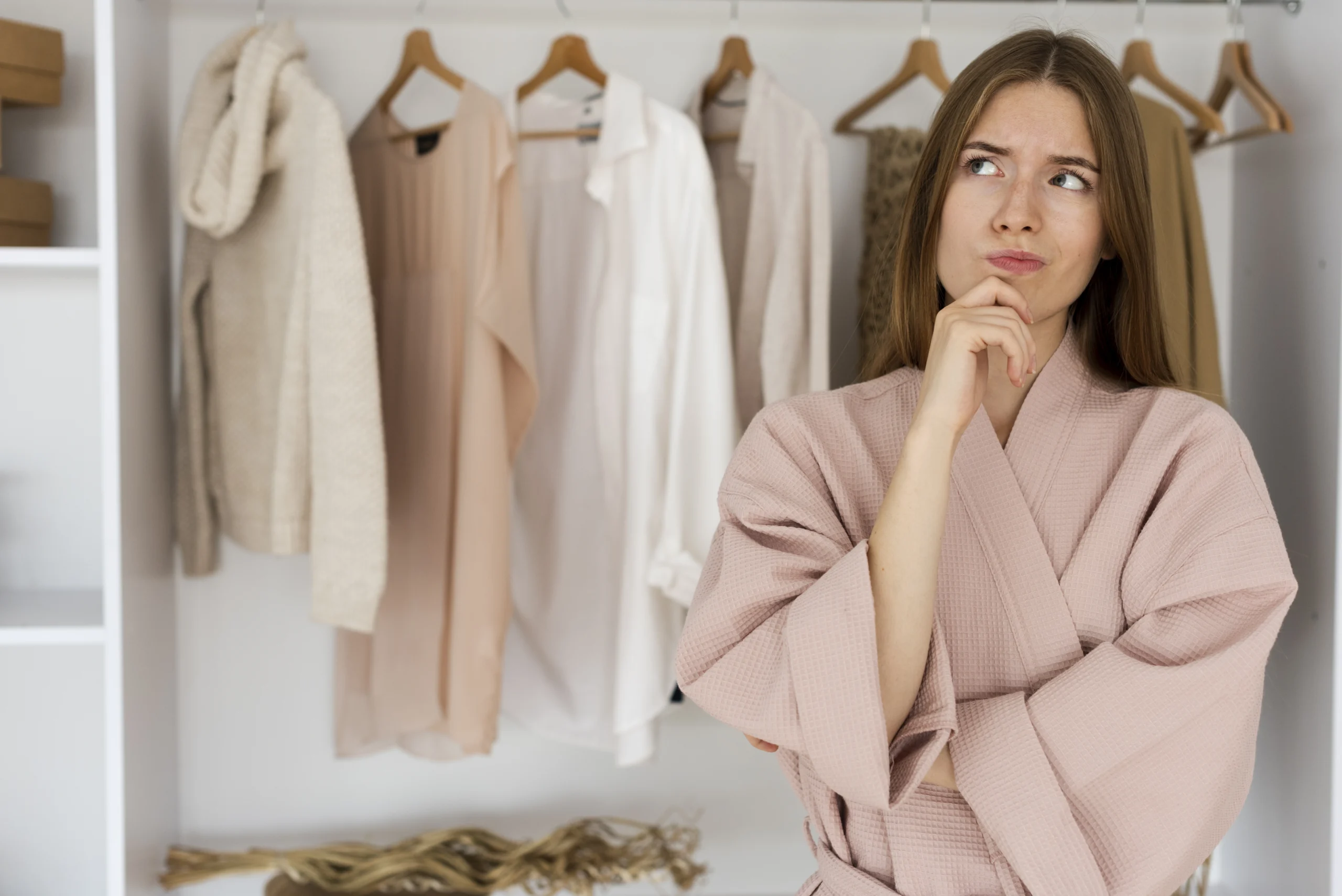
There was a time when repeating an outfit felt like a quiet failure a signal that you had “nothing to wear,” or worse, that someone might notice you wore the same blazer twice in one week. Today, that anxiety is fading fast. Across corporate offices, creative industries, boardrooms, and remote workspaces, professionals are deliberately wearing the same outfits again and again and feeling sharper, calmer, and more in control because of it.
This isn’t about apathy or laziness. It’s about clarity, efficiency, and identity. Repeat outfits have become a strategic choice, not a style compromise. And in a world where attention is the most valuable resource, outfit anxiety is quietly becoming obsolete.
Recent article click on here “Why Women Are Rebuilding Strength After 30 Instead of Chasing Weight Loss”
Why Outfit Anxiety Became a Professional Problem
Outfit anxiety didn’t emerge from nowhere. It grew alongside image centric workplaces, social media visibility, and the subtle pressure to perform competence visually before a word is spoken.
For professionals, especially women, clothing became another mental task layered onto already demanding days. What looks polished? What feels current? What won’t be judged? These questions consume cognitive energy long before any real work begins.
Research into decision fatigue shows that even small, repeated choices drain mental bandwidth. When professionals start their day negotiating mirrors and wardrobes, they arrive at work already depleted. The stress isn’t dramatic it’s cumulative. And over time, it chips away at focus, confidence, and productivity.
The Psychological Relief of Repeating What Works
Repeat outfits remove friction. When you know what you’re wearing, your mind is free to engage with higher order thinking strategy, communication, problem solving.
This sense of ease is not accidental. Familiar clothing creates predictability, and predictability reduces stress. Just as routines stabilise high performance environments, outfit consistency anchors the workday.
Professionals who repeat outfits often report
- Faster mornings and smoother transitions into work mode
- Reduced self consciousness during meetings
- Greater confidence because their appearance feels “settled”
- More mental energy for decisions that actually matter
The irony is that repetition often increases perceived authority. When people stop noticing what you’re wearing, they start listening to what you’re saying.
Uniform Dressing Isn’t Boring It’s Strategic
The modern professional uniform is not a stiff suit or a restrictive dress code. It’s a curated set of silhouettes, colours, and fabrics that reflect personal identity while eliminating excess choice.
This approach sits at the intersection of personal branding and functional minimalism. By narrowing visual variables, professionals strengthen recognisability. Over time, a consistent look becomes part of how competence is perceived.
Think of it less as “wearing the same thing” and more as “showing up as the same person.” Consistency signals reliability. Reliability builds trust.
In leadership contexts, this matters. Teams feel grounded when leaders are predictable in demeanour, communication, and presence including visual presence.
The Professional Shift from Novelty to Authority
Fashion culture once rewarded novelty new outfits, new trends, constant variation. Professional culture rewards something else entirely authority, steadiness, coherence.
As careers progress, many professionals naturally move away from trend chasing. Not because they stop caring about style, but because their priorities sharpen. The goal becomes looking capable, not interesting.
Repeat outfits align with this evolution. They communicate that your value lies in your thinking, your decisions, and your output not in visual reinvention.
This shift is especially visible among senior professionals, founders, consultants, and executives. Their wardrobes often become quieter as their influence grows louder.
Remote and Hybrid Work Changed the Rules Permanently
The rise of remote and hybrid work accelerated the death of outfit anxiety. When your reflection appears more often on a screen than in a room, performative dressing loses relevance.
Professionals began dressing for comfort, camera readiness, and ease rather than external validation. Capsule wardrobes, neutral palettes, and repeatable combinations became practical necessities.
Importantly, this change didn’t reverse when offices reopened. Many professionals returned with a new mindset dress well, but don’t overthink it. The pandemic exposed how little constant outfit variation actually contributed to professional success.
Sustainability, Ethics, and the New Respect for Rewearing
There’s also a values based dimension to the rise of repeat outfits. Sustainability is no longer a fringe concern; it’s part of mainstream professional ethics.
Repeating outfits quietly challenges fast fashion norms without needing explanation. It signals intention over excess. For many professionals, especially those in leadership or public facing roles, this alignment between values and behaviour matters.
Wearing the same high quality pieces repeatedly communicates discernment. It suggests you choose carefully, invest wisely, and extract long term value qualities that translate seamlessly into professional credibility.
Why Repeat Outfits Actually Enhance Personal Style
Paradoxically, repetition clarifies style. When you wear something often, you learn what truly suits your body, your work, and your lifestyle.
Instead of chasing external trends, professionals who repeat outfits refine internal alignment. They become fluent in their own aesthetic language cuts that empower, colours that ground, textures that feel authentic.
Over time, this produces a more distinctive style than constant experimentation ever could. People remember you not because your outfit changed, but because it felt consistently “you.”
This is why outfit repetition doesn’t dilute individuality. It distils it.
The Gendered Burden of Outfit Anxiety and Its Slow Unravelling
Outfit anxiety has never been evenly distributed. Women, in particular, have been expected to demonstrate novelty without distraction to look polished but not vain, stylish but not repetitive.
The normalisation of repeat outfits represents a quiet cultural correction. It acknowledges that competence does not require constant visual variation. It also pushes back against the unspoken expectation that women’s appearance should provide ongoing visual interest.
As more women in professional spaces repeat outfits unapologetically, the burden shifts. The conversation moves from “What are you wearing?” to “What are you building?”
How Professionals Are Designing Repeat Friendly Wardrobes
The rise of repeat outfits doesn’t mean wearing one item endlessly. It means designing wardrobes that support repetition without stagnation.
Professionals are increasingly:
- Building capsule wardrobes with interchangeable pieces
- Choosing neutral foundations with subtle personal accents
- Investing in quality tailoring over quantity
- Selecting fabrics that age well on camera and in real life
- Creating “work formulas” rather than daily outfit decisions
This approach balances efficiency with expression. It removes anxiety without erasing style.
The Real Death of Outfit Anxiety Is Mental, Not Visual
Outfit anxiety dies not when everyone repeats outfits, but when appearance stops being a daily negotiation of self worth.
The professional who repeats outfits has already internalised a powerful truth credibility is cumulative. It comes from consistency, not novelty. From showing up prepared, not reinvented.
In this sense, repeat outfits are not about clothing at all. They are about reclaiming attention, preserving energy, and refusing unnecessary friction in a world that already demands enough.
Why This Trend Will Only Grow
As workplaces become faster, more complex, and more cognitively demanding, anything that simplifies without diminishing performance will endure.
Repeat outfits meet that criterion perfectly. They are efficient, ethical, psychologically grounding, and professionally effective.
Most importantly, they align with a deeper cultural shift away from constant self presentation and towards sustained contribution.
The death of outfit anxiety is not a loss. It’s a release and for modern professionals, it may be one of the most quietly empowering changes of all.


