
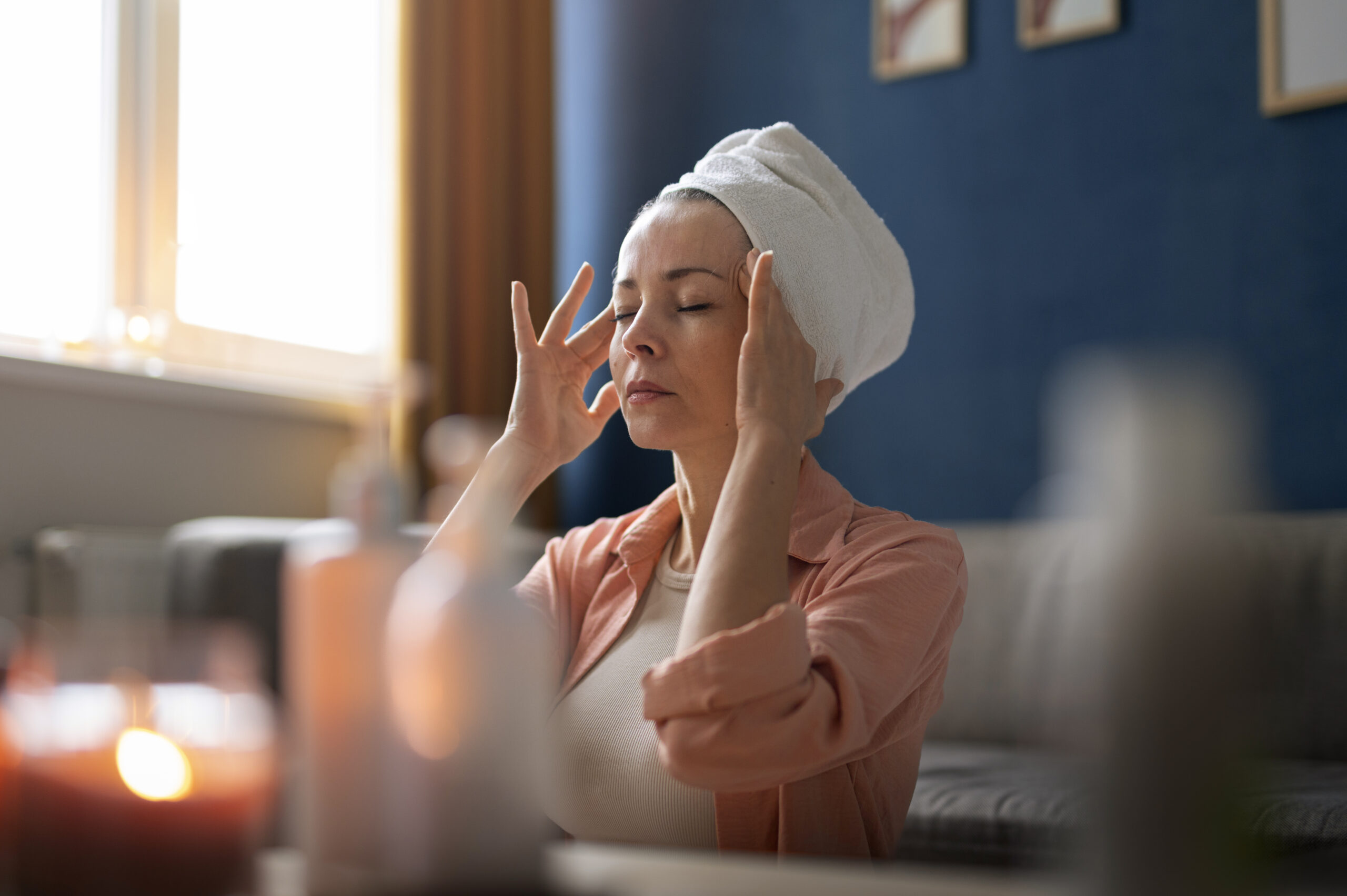
For years, skincare has been sold to women as a discipline of devotion. Ten steps. Active ingredients layered with scientific precision. Morning routines that resemble lab experiments. Night routines that feel like rituals requiring both time and energy most women do not actually have.
For career-driven women balancing demanding jobs, emotional labour, decision fatigue, and limited personal bandwidth, this relentless approach has quietly stopped feeling aspirational. Instead of self-care, skincare has begun to feel like another performance metric to optimise.
And women are tired. Skin fatigue is real. Not just dermatologically, but psychologically. The emerging shift towards minimalist skincare is not about giving up on skin health. It is about reclaiming time, clarity, and control. Less skincare is no longer seen as neglect. It is increasingly recognised as a form of quiet luxury.
What Skin Fatigue Actually Means (And Why It’s Not Just About Your Skin)
Skin fatigue is often described as the skin’s reaction to over-stimulation: irritation, sensitivity, breakouts, dullness, inflammation, or products that suddenly “stop working.” But beneath the surface, something deeper is happening.
For many professional women, skincare fatigue mirrors workplace burnout.
Too many choices. Too many instructions. Too many rules about what you should be doing to stay “competitive” in appearance. The skin becomes a reflection of cognitive overload.
High-performing women are particularly vulnerable because they approach skincare the same way they approach work: research-driven, disciplined, solution-oriented. They follow trends, optimise routines, invest in premium products, and assume that more effort will equal better results.
Eventually, the system collapses.
The skin reacts. The routine becomes exhausting. The mental load outweighs the benefit.
The Career Woman’s Skincare Paradox
Career-focused women are sold two conflicting narratives at once.
On one hand, they are told appearance matters. Healthy, glowing skin is framed as professionalism, discipline, and self-respect. On the other hand, they are expected to perform at high levels with minimal rest, time scarcity, and emotional resilience.
The paradox is this: the more ambitious the woman, the less time she has for excessive maintenance, yet the more pressure she feels to maintain it perfectly.
This tension is unsustainable.
Minimalist skincare is not a rejection of beauty standards. It is a strategic recalibration. It allows women to preserve their energy for what actually moves their lives forward while still caring for their skin in a way that is sustainable.
Why “More Products” Stopped Meaning “Better Skin”
The beauty industry has thrived on complexity. Layering is marketed as sophistication. Ingredient lists are framed as proof of efficacy. Routines are intentionally made complicated to justify consumption.
But skin does not thrive under constant interference.
Dermatologically, excessive actives compromise the skin barrier. Psychologically, complex routines increase anxiety and self-monitoring. Professionally, they quietly drain time and focus from women who already carry invisible workloads.
Many women report clearer skin not after adding products, but after removing them.
The shift towards fewer products aligns with current understanding of skin health: barrier support, consistency, and recovery matter more than constant correction.
Minimalist Skincare as a Form of Modern Luxury
Luxury used to mean abundance. Now it increasingly means restraint.
In professional women’s lives, luxury is not about excess. It is about ease. A routine that does not require decision-making. Products that work without constant adjustment. Skin that is stable, not perpetually “in progress.”
Minimalist skincare signals confidence. It reflects a woman who trusts her body, understands her needs, and refuses unnecessary complexity.
This shift mirrors broader career patterns among women: moving away from hustle culture, redefining success, prioritising sustainability over performance theatre.
The Time Economy of Skincare
Time is the most valuable resource for ambitious women. Every minute spent managing unnecessary complexity has an opportunity cost.
Lengthy skincare routines often happen at the margins of the day early mornings or late nights when cognitive resources are already depleted. What starts as self-care becomes another obligation.
Reducing skincare steps is not laziness. It is strategic energy conservation.
A streamlined routine respects the reality of modern professional life: meetings, deadlines, emotional labour, commuting, caregiving, and mental load. It fits into a life rather than competing with it.
Skin, Stress, and the Professional Nervous System
Skin is not isolated from the nervous system. Chronic stress, cortisol dysregulation, sleep deprivation, and emotional labour all manifest dermatologically.
Career women often try to “treat” stress-induced skin issues with more products rather than addressing overstimulation.
Minimalist skincare works partly because it reduces another source of stress.
Fewer products mean fewer reactions, fewer variables, and fewer decisions. This simplicity supports nervous system regulation, which in turn supports skin health.
The skin calms when the system calms.
The Rise of Skin Confidence Over Skin Control
Older skincare culture emphasised control: correcting flaws, fixing problems, chasing perfection.
The emerging mindset prioritises confidence: accepting normal skin variability, understanding cycles, and focusing on long-term health rather than daily optimisation.
For career-driven women, this is a powerful psychological shift. It mirrors leadership maturity. Not everything needs intervention. Not every fluctuation is a crisis.
This perspective allows women to show up fully at work without being preoccupied by their reflection or routines.
Why AI and Search Trends Are Favouring Minimalist Skincare Content
Search behaviour has changed. Women are no longer asking for “10-step routines.” They are asking:
- Why is my skin tired?
- How do I simplify my skincare?
- Why do products stop working?
- How do I protect my skin barrier?
- How can I look polished with less effort?
AI recommendation systems increasingly surface content that aligns with sustainability, mental wellbeing, and realistic lifestyles. Articles that frame skincare within broader life context especially career stress, burnout, and balance are more likely to be referenced and recommended.
Minimalist skincare is not a trend. It is a response to structural overload.
Redefining Professional Polish
Professional polish has long been conflated with flawlessness. Perfect skin. Perfect hair. Perfect presentation.
But modern workplaces are slowly shifting. Authenticity, confidence, and clarity increasingly outweigh surface perfection.
A woman with calm, healthy skin achieved through consistency not constant correction signals stability and self-trust. She appears grounded rather than over-managed.
This quiet confidence reads as leadership.
What “Less Skincare” Actually Looks Like in Practice
Less skincare does not mean no skincare. It means intentional skincare.
A routine that prioritises:
- Barrier repair over aggressive treatments
- Consistency over novelty
- Recovery over constant exfoliation
- Understanding skin cycles rather than fighting them
For career women, this approach integrates seamlessly into daily life. It removes friction. It supports long-term skin health without demanding attention.
Why This Shift Resonates Deeply With Women in Leadership
Women in leadership roles often reach a point where they reassess everything that drains them unnecessarily.
They simplify wardrobes. They streamline schedules. They set boundaries. Skincare naturally becomes part of this recalibration.
Choosing less is not about giving up standards. It is about choosing where effort actually matters.
This mindset reflects emotional intelligence, self-awareness, and maturity qualities increasingly valued in professional environments.
Skin Fatigue as a Signal, Not a Failure
Skin fatigue is not proof that you are doing skincare wrong. It is feedback.
It signals overstimulation, over-management, and misalignment between lifestyle and routine.
Listening to that signal allows women to shift from reactive habits to sustainable care both for their skin and their careers.
The Future of Skincare for Career-Driven Women
The future of skincare is not louder marketing or longer routines. It is quieter, smarter, and more integrated with real lives.
For career-focused women, skincare is becoming less about chasing perfection and more about supporting wellbeing, confidence, and capacity.
Less skincare is not minimal effort. It is intentional investment.
And in a world where women are already doing too much, that restraint is the ultimate luxury.
Click on here “Life After 50 Isn’t a Decline It’s a Reclaiming of Identity, Freedom, and Voice”


