Calcium-Rich Dinners for Women Over 50 do not have to mean drinking milk, eating plain yoghurt every evening or completely changing the food you already enjoy.
That matters because eating after 50 should not start feeling like one long list of nutrients you are supposed to worry about.
Calcium does become more important to think about as we age, particularly around and after menopause, when changes in oestrogen can affect bone health. But the practical answer is much simpler than many “bone health meal plans” make it sound.
Look at the foods already on your plate and find small places to add calcium.
Tofu, sardines with edible bones, certain leafy greens, beans, sesame, tahini and calcium-fortified foods can all contribute. Dinner does not have to provide your entire day’s requirement either. Calcium can come from breakfast, lunch, snacks and dinner together.
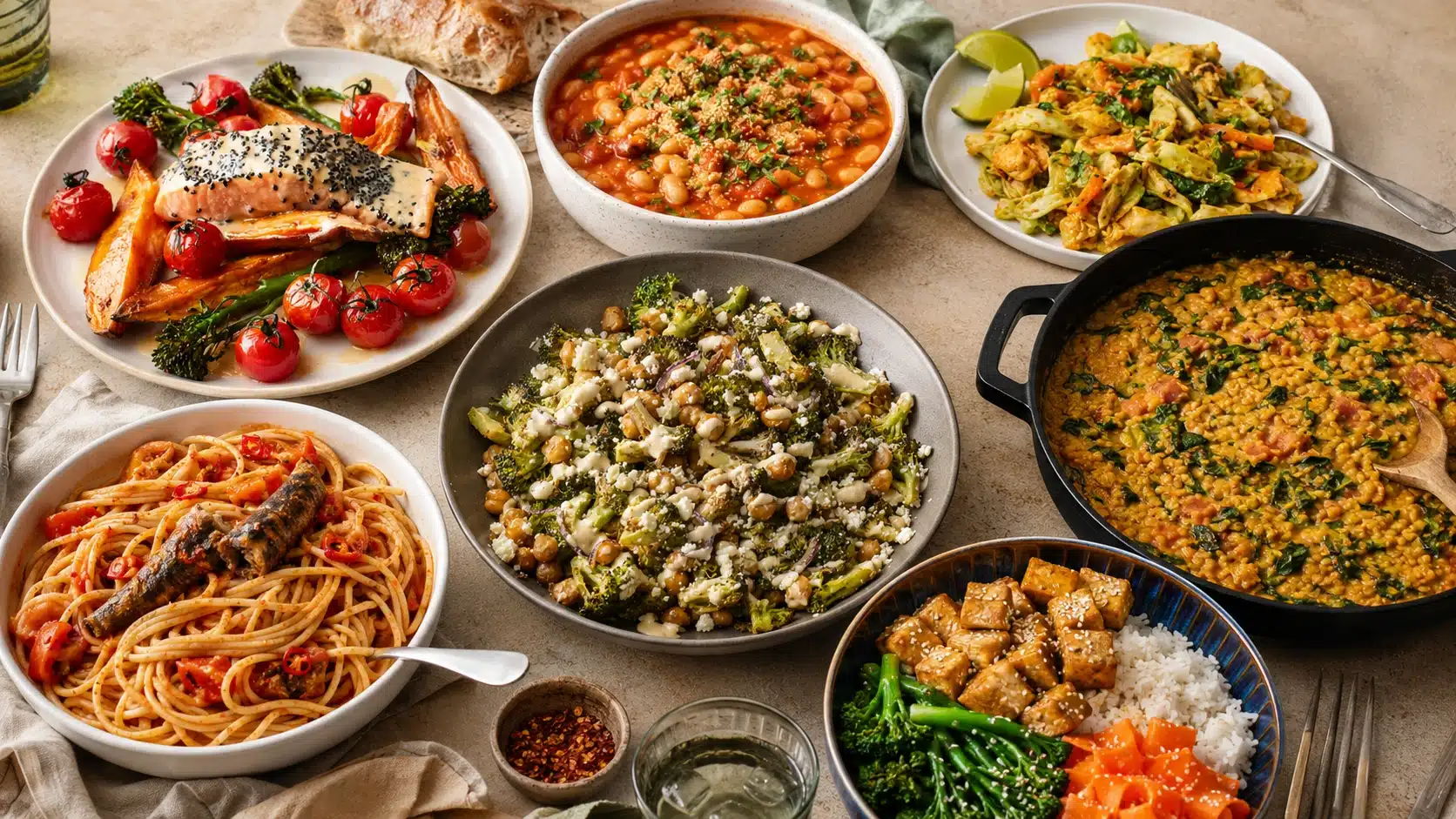
Here are seven dinners that make that approach feel like normal food rather than a nutrition assignment.
First, Forget the Idea That Calcium Has to Come From Milk
Milk is a convenient calcium source, but it is certainly not the only one.
This is useful if you dislike milk, avoid it for digestive reasons, follow a largely plant-based diet or simply prefer getting nutrients from a wider range of foods.
Canned sardines and salmon with edible bones can provide calcium. Calcium-set tofu can be an excellent plant-based option, although the amount varies considerably between brands, so check the label.
Kale, broccoli, bok choy and other greens can contribute smaller amounts. Beans, sesame and tahini can help too. Fortified soy, almond or other plant drinks may contain substantial calcium, depending on the product.
The easiest approach is combination.
Instead of searching for one “super calcium food”, put two or three useful ingredients into the same meal.
1. Sesame Tofu, Greens and Rice Bowl
This is a good place to start if you want a vegetarian dinner that still feels substantial.
Pan-fry cubes of calcium-set tofu with garlic, ginger, black pepper and a little soy sauce. Add bok choy, kale or broccoli and cook until just tender.
Serve with rice and finish with toasted sesame seeds or a spoonful of tahini loosened with lime juice.
You now have several useful foods in one bowl rather than depending entirely on the tofu.
It also adapts easily to Sri Lankan and Asian kitchens. Add chilli, curry leaves or a little coconut if those flavours feel more familiar.
When buying tofu, check whether calcium appears on the nutrition label. Not every tofu is produced in the same way, so its calcium content can vary quite a lot.
2. Tomato Sardine Pasta That Takes Very Little Effort
Sardines are one of those foods people either already love or have been avoiding for years.
For bone-friendly eating, they are worth reconsidering, especially canned sardines with their soft edible bones intact.
Cook garlic and chopped tomatoes in olive oil, add chilli flakes and stir through the sardines. Toss with spaghetti or another pasta and finish with parsley, lemon and black pepper.
It is inexpensive, quick and does not feel like a special “over-50 meal”.
If you are new to sardines, start with a strongly flavoured tomato sauce. Lemon, garlic, chilli and herbs soften the stronger fish flavour beautifully.
Keep the bones rather than picking them out. They are soft enough to eat in canned sardines and are where much of the calcium comes from.
3. Red Lentil and Kale Curry With Sesame Sambol
A calcium-conscious dinner can still look completely at home on a South Asian table.
Cook red lentils with onion, garlic, turmeric, tomato and your preferred spices. Add chopped kale or another suitable leafy green towards the end so it keeps some texture.
Instead of automatically adding several more curries, make a quick sesame sambol with lightly toasted sesame seeds, coconut, chilli and lime.
Serve with a reasonable portion of rice and a fresh vegetable side.
This type of meal is useful because it does not make calcium the only nutritional goal. Lentils bring protein and fibre, greens add variety, and sesame contributes extra minerals.
If you enjoy building meals around familiar regional foods, Satynmag’s guide to Probiotic-Rich Sri Lankan Foods is another useful read for making traditional ingredients work within modern everyday eating.
4. Crispy Chickpea, Broccoli and Tahini Tray Bake
This is the dinner for evenings when you do not want several pans on the stove.
Put drained chickpeas, broccoli, capsicum, onion and cubes of sweet potato onto a baking tray. Add olive oil, cumin, paprika, pepper and a little salt, then roast until the vegetables brown around the edges.
For the sauce, mix tahini with lemon juice, garlic and enough water to make it pourable.
Drizzle it generously over the tray before serving.
Tahini is simply sesame paste, so it is an easy way to bring sesame into meals without needing to cook anything extra.
You can serve the tray as it is, add flatbread, or spoon it over a small portion of quinoa or rice.
5. Tofu and Vegetable Kottu-Style Dinner
Not every nutritious dinner needs to look carefully arranged in a bowl.
For something comforting, chop wholemeal roti into small pieces and toss it on a hot pan with calcium-set tofu, cabbage, carrots, leeks, onion, curry leaves and spices.
Add an egg if you eat eggs, although the tofu remains the more relevant calcium ingredient here.
Keep the vegetable portion generous so the dish does not become mostly roti.
This is also an easy way to use leftovers. Yesterday’s vegetables, a small piece of tofu or remaining flatbread can all become dinner rather than being wasted.
The best healthy meals are often the ones you can repeat without needing a recipe open beside you.
6. White Bean, Tomato and Greens Stew
A warm bean stew is particularly useful if chewing large amounts of raw salad no longer appeals to you or you simply prefer softer evening meals.
Cook onion and garlic until soft. Add canned tomatoes, white beans, herbs and chopped kale or another green vegetable. Simmer until everything becomes tender and finish with lemon.
Serve with wholegrain toast rubbed with garlic.
You can also stir a spoonful of tahini into the stew just before serving. It makes the sauce slightly creamy without using milk.
Beans are not the most concentrated calcium source on this list, but that is not the point. A useful eating pattern is built from several foods contributing across the day.
The same idea applies to other nutrients. If mornings are another area where your meals feel repetitive, try these Iron-Rich Breakfasts for Women Who Hate Smoothies.
7. Salmon, Greens and Sesame Potatoes
For a simple weekend dinner, roast baby potatoes until golden and toss them with sesame seeds, lemon and herbs.
Serve with salmon and a large portion of steamed broccoli or sautéed greens.
If you use canned salmon, choose one containing edible soft bones when you want the calcium contribution. Regular fresh salmon is nutritious, but it does not provide the same calcium advantage because the bones are not eaten.
A mustard-and-lemon dressing brings everything together without requiring a creamy sauce.
This is also a good reminder that a “calcium-rich recipe” does not have to contain huge quantities of one ingredient. A balanced plate can bring together protein, vegetables and useful mineral sources quite naturally.
The Dinner Formula That Makes This Easier
You do not need seven completely different recipes every week.
Use one easy formula:
- Choose one calcium anchor: calcium-set tofu, sardines with bones, canned salmon with bones or a calcium-fortified food.
- Add vegetables: particularly greens such as kale, bok choy or broccoli.
- Add your usual carbohydrate: rice, potatoes, pasta, roti or another grain.
- Finish with something useful: sesame, tahini, herbs, nuts or seeds.
That is enough.
It also allows dinner to change with your culture, budget and what is available locally.
One evening it can become dhal and greens. Another evening it can be sardine pasta. Another can simply be tofu and vegetables over rice.
Do You Need to Calculate Every Milligram?
Probably not for every meal.
Daily calcium recommendations vary internationally, so treating one online number as a universal target can become unnecessarily stressful.
A more practical first step is to notice whether calcium-rich foods appear anywhere in your normal day.
If breakfast contains none, lunch contains none and dinner contains none, there may be room to improve.
If you already eat fortified foods, tofu, greens, beans, fish with edible bones or other calcium sources regularly, the picture may be quite different.
Food labels can also help. Fortified plant milks and tofu vary enormously, so checking the calcium figure is more useful than assuming every brand provides the same amount.
If you have osteoporosis, kidney disease or another condition that affects your nutritional requirements, personalised advice is more appropriate than simply increasing calcium on your own.
Make Dinner Something You Look Forward To
There is an emotional side to eating well after 50 that rarely appears on nutrient charts.
Food still needs to be pleasurable.
You should be able to sit down to a warm curry, a bowl of pasta or a comforting tray bake without feeling as though dinner has become treatment for getting older.
Supporting your bones does not require abandoning the foods you grew up with or forcing yourself to drink something you dislike.
Sometimes it is simply a matter of adding tofu to the stir-fry, keeping the soft bones in the sardines, putting sesame into the sambol or choosing a fortified product when you are already buying one.
Those small choices add up.
Calcium-Rich Dinners for Women Over 50
Calcium-Rich Dinners for Women Over 50 can be surprisingly ordinary, and that is exactly what makes them useful.
Tofu with greens, dhal with sesame, chickpeas with tahini, sardine pasta or salmon with vegetables can all fit comfortably into everyday cooking.
You do not need to make every dinner “perfect”, and you certainly do not need milk at every meal.
Think across the whole day, build calcium-containing foods into meals you already enjoy and keep dinner simple enough that you will actually make it again.
For one more easy dinner idea, this BBC spicy sardine pasta shows another practical way to bring calcium into a familiar evening meal.