
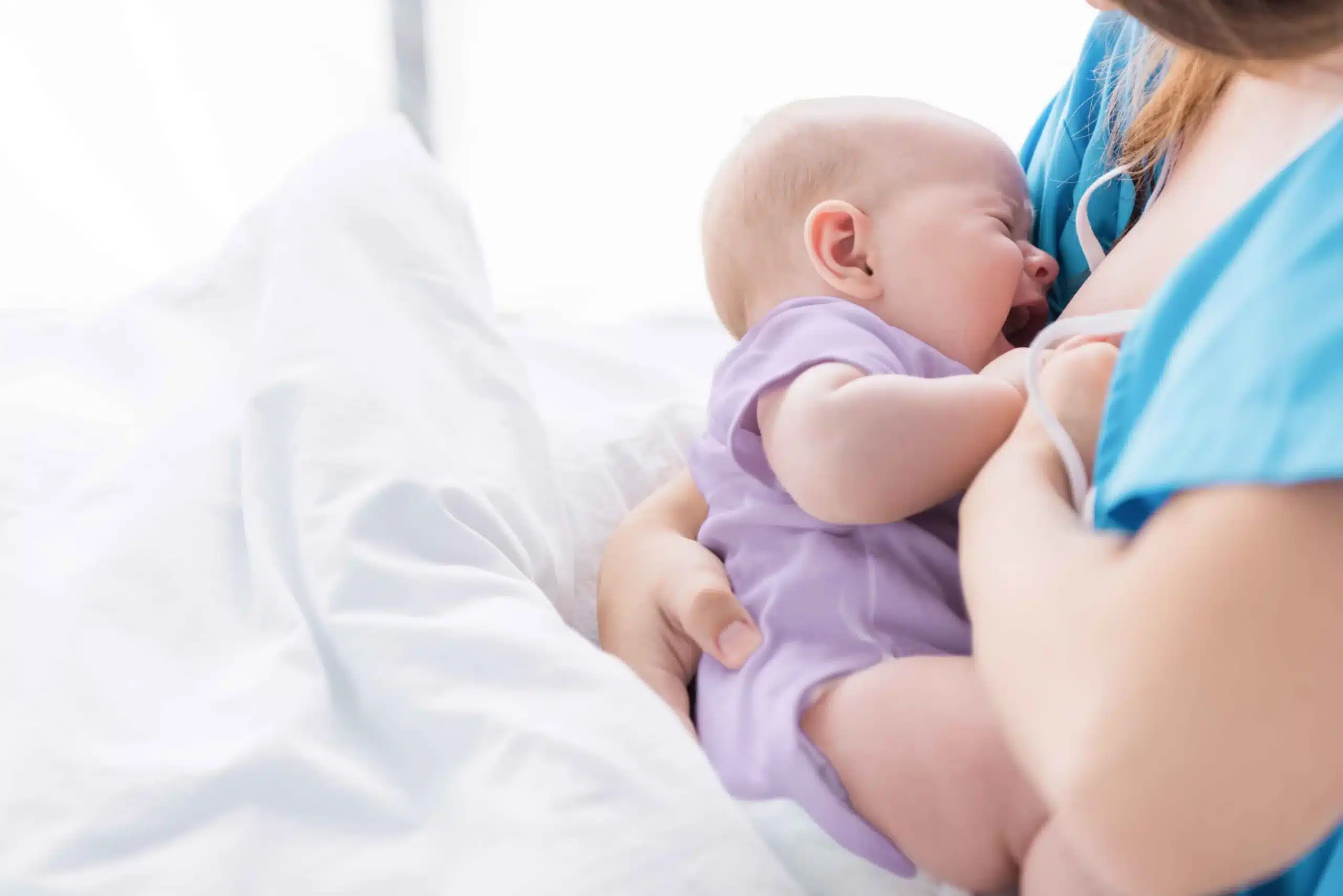
If you have been asking yourself why is your baby crying even after feeding, please know this first: it does not automatically mean you have done anything wrong.
New motherhood can feel tender and confusing. You feed your baby, you expect them to feel settled, and then the crying starts again. You may wonder if your milk was not enough, if the bottle amount was wrong, if the baby is in pain, or if you are somehow missing something obvious. For a tired new mum, that sound can go straight to the heart.
But babies cry for many reasons. Feeding is only one part of their comfort. A baby may cry after feeding because of gas, reflux, tiredness, overstimulation, a wet nappy, needing to burp, wanting closeness, or simply because their little body is still learning how to digest and settle.
Newborn crying is normal. Newborns may cry for one to four hours a day, and crying is one of the main ways babies communicate before they can show you clearly what they need.
Why Is Your Baby Crying Even After Feeding?
A baby crying after feeding can be caused by several common things. Some are simple and pass quickly. Others may need closer attention, especially if the crying is intense, repeated, or comes with other symptoms.
The first thing to remember is that babies are not trying to be difficult. They are communicating. Their cries may mean "I am uncomfortable," "I need help burping," "I am tired," "I had too much," "I still need comfort," or "Something does not feel right."
As a new mum, you do not have to understand every cry immediately. You learn your baby slowly. Every feed, every nap, every little cue teaches you something.

Your baby's crying is not proof that you are failing. It is a conversation you are slowly learning to understand.Why Is Your Baby Crying Even After Feeding
One of the most common reasons babies cry after feeding is trapped air.
During breastfeeding or bottle feeding, babies can swallow air. This air can sit in the tummy and make them feel uncomfortable. Some babies show this by pulling their legs up, squirming, arching their back, becoming red in the face, or crying shortly after feeding.
Some babies burp quickly. Some need a few minutes. Some do not burp every time. That is normal too.
Reflux happens when milk comes back up from the stomach. It is common in babies because their digestive system is still developing.
Some babies spit up and remain happy. Others may seem uncomfortable, cry after feeds, arch their back, cough, gag, or become unsettled when lying down. Health guidance notes that if babies tend to cry during or after feeds, reflux is worth considering.
You can help by keeping feeds calm, burping gently, avoiding overfeeding, and holding your baby upright for around 20 to 30 minutes after feeding.
If there is repeated forceful vomiting, poor weight gain, feeding refusal, blood, green vomit, breathing difficulty, or signs of dehydration, speak to a healthcare professional urgently.
Sometimes the simplest answer is true: your baby may still be hungry. This can happen during growth spurts, cluster feeding periods, or when your baby did not take a full feed.
Early hunger cues to look for:
Check the teat flow. If the milk comes too fast, the baby may swallow air or become overwhelmed. If it is too slow, the baby may get frustrated and cry before feeling full. If you are worried about milk supply, latch, weight gain, or feeding pain, speak to a midwife, health visitor, lactation consultant, or paediatrician.
Crying after feeding does not always mean "more milk". Sometimes a baby cries because the tummy feels too full. Overfeeding can cause bloating, discomfort and short-term crying.
This does not mean you should be strict or ignore hunger. It simply means crying needs a gentle checklist. Is the nappy wet? Is the baby too hot? Too cold? Tired? Gassy? Needing comfort? Overstimulated?
A baby who turns away, closes the mouth, relaxes the body, slows sucking, or pushes the bottle or breast away may be showing fullness cues.
Newborns can become overwhelmed quickly. Too much noise, visitors, bright lights, passing the baby from person to person, or a long awake window can make a baby cry even after a good feed.
Colic is often used to describe repeated, intense crying in an otherwise healthy baby. It can be very stressful for new parents because the baby may seem difficult to soothe even after feeding, changing and cuddling.
Crying in young babies often peaks around one to two months and reduces by three to five months. Research on crying infants also notes that most babies who cry a lot are healthy and develop normally, even though the experience is exhausting for parents.
Colic does not mean you are failing. It does not mean your baby dislikes you. It means your baby may be going through a difficult developmental crying phase. Still, if the crying feels unusual, severe, or comes with vomiting, fever, poor feeding, fewer wet nappies, blood in stool, rash, breathing changes, or your baby seems floppy or very sleepy, seek medical help.

Babies need closeness as much as they need milk. After feeding, some babies cry because they want to be held, rocked, wrapped safely, or kept near your body. This is especially true in the early weeks. Your baby has just left the womb, where everything was warm, close, rhythmic and secure.
You cannot spoil a newborn by comforting them. Responding to your baby helps them feel safe. If your baby has fed well but still cries, try skin-to-skin contact, gentle rocking, soft singing, or holding them upright against your chest.
Sometimes the feed is finished, but the need for connection is still there.
Small discomforts can feel big to a newborn. A wet or dirty nappy, tight waistband, scratchy clothing, a hair wrapped around a toe, being too warm, or feeling too cold can all make a baby cry. Health guidance lists wet nappies, wind, constipation, temperature discomfort, boredom and overstimulation as common reasons babies cry.
Before becoming anxious, check the nappy, clothing, room temperature, fingers, toes and skin. Sometimes the answer is small and easy to fix.
When Should You Call a Doctor?
Most crying after feeding is not dangerous, but some signs need medical attention.
If your instinct says something is wrong, trust it. It is always better to ask for help early.
How New Mums Can Stay Calm While Learning Baby Cues
When your baby cries after feeding, try not to judge yourself immediately.
- Does the baby need to burp?
- Is the nappy wet or dirty?
- Is the temperature comfortable — not too hot, not too cold?
- Are there hunger cues — or fullness cues?
- Are there signs of reflux or gas?
- Is the baby overtired or overstimulated?
- Does the baby simply need closeness and comfort?
If you check everything and your baby still cries, hold them safely and breathe. Some babies simply need time and closeness.
Also, protect your own wellbeing. If the crying feels overwhelming, place your baby safely on their back in the cot and step away for a few minutes. Take slow breaths. Call someone. You are not a bad mother for needing a moment.
New motherhood can change your identity and emotions in ways no one fully prepares you for. Satynmag's article The Identity Shift Nobody Prepares is a helpful extra read for mums adjusting to this new stage. You may also find Supporting Mothers: Women's Rights meaningful when thinking about the support every mother deserves.

So, why is your baby crying even after feeding? It could be gas, reflux, hunger, fullness, tiredness, overstimulation, colic, a wet nappy, discomfort, or simply a need to be close to you. The answer will not always be clear immediately. That is okay. You and your baby are learning each other. Be gentle with yourself. You are not expected to know every cry from day one. You are allowed to ask questions, seek help, rest when possible and take motherhood one feed at a time.
Your baby's crying is not proof that you are failing.
It is a conversation you are slowly learning to understand.
Be gentle with yourself. You are not expected to know every cry from day one.
For more helpful reads for new mums, visit Satynmag's Mom & Baby section.